My Husband's Foot Caught on the Kitchen Doorway and I Caught Him by His Belt. That Was the Night I Stopped Trusting His Stroke Rehab Team to Fix His Foot Drop.

I need to tell you something that took me two years to figure out. Two years of physical therapy that plateaued. Two years of catching my husband before his dragging foot sent him to the floor. Two years of sleeping with one ear open, listening for the thud that meant he had gone down again.
If your husband had a stroke. If his foot drags when he walks. If his calf is locked tight as a board and his knee will not bend. If he wears a clunky plastic AFO brace that makes his leg even stiffer. If you have become his full-time safety net and you are exhausted and terrified and nobody seems to have an answer for the foot drop or the spasticity... this is the story I wish someone had told me sooner.
My name is Linda. I am 66 years old. I have been my husband Richard's caregiver for two years since his stroke. And I am writing this because a neurologist finally told me the truth about why the AFO brace and the Botox injections and the weekly PT never fixed the way he walks. Not even close.
But before I get to that, I need you to understand what it was like. Because unless you have lived it, you cannot imagine what post-stroke foot drop and spasticity does to a marriage. To a family. To you.
"I Stopped Walking Beside My Husband. I Started Walking Behind Him."
Richard had his stroke two years ago. He was 64. Strong. Independent. The kind of man who built our back deck with his own hands and coached our grandson's little league team every Saturday morning.
The stroke happened on a Tuesday afternoon. He was sitting at the breakfast table reading the paper. One minute he was reaching for his coffee. The next his right arm went limp and the right side of his face dropped. I called 911. The ambulance got there in eleven minutes. The doctors said that was what saved his life.
The first few months of rehab were hopeful. He got his speech back. His arm started to come back. But his right leg never fully recovered. The signal from his brain to his foot was damaged. The muscles that lift the toes had gone silent. And the muscles in his calf locked up tight in a state of constant contraction the doctors called spasticity.
What that meant in real life was this: his foot dragged. His toes hung down. His knee would not bend properly. He could not lift his foot to clear the carpet, the rug, the threshold of any doorway in our house.
And every step became a hazard. One catch of the toe and he would go down.
I stopped walking beside him. I started walking behind him. Arms half-raised. Fingers ready to grab his belt if he started to tip.
He fell nine times in one year. I caught him for four of those. The other five, I was not fast enough. He broke his wrist. He bruised his hip so badly he could not sit comfortably for three weeks. I drove him to the emergency room at 1am in my dressing gown, hands shaking on the steering wheel, wondering if this was the fall that would break his hip. Or worse.
I stopped sleeping through the night. Every creak in the house, every sound from the bathroom, I was bolt upright. Listening. Waiting.
He stopped going to our grandson's football games. He would make the excuse. "I'm a bit tired today." He was not tired. He was afraid. And I knew it. And he knew I knew it. And neither of us said it out loud.
The man who had carried me over the threshold of this house thirty-nine years ago could not walk from his bedroom to his bathroom without me hovering behind him like a spotter at a gym.
Nobody Tells You That When His Foot Drops, Your Life Drops Too
Here is what I wish someone had warned me about.
It is not just his foot that stops working. Your entire life stops too.
You cannot leave him alone. You cannot run to the shops without worrying. You cannot sleep without listening. You become a full-time safety net for someone who used to be your equal partner. Your best friend. Your person.
And the grief is the strangest kind. Because he is still here. But the man I married is being dragged backward inch by inch by a leg that will not lift. And nobody prepares you for that kind of loss.
My daughter started talking about "options." She meant assisted living. She was planning his surrender. I was not ready for that. Not yet.
But here is the part that made me angry. Truly angry.
I was at every single appointment. I drove. I parked close to the entrance. I walked behind him down the corridor. I sat in the chair next to him and answered half the questions because his frustration made him shut down in medical settings.
I tracked his falls in a notebook. Dates. Times. Where the toe caught. How tight his calf was that morning. I brought the notebook to every appointment.
And you know what they did every single time?
Adjusted the brace. Again.
"Let's get him fitted for a new AFO."
"Let's try a Botox injection in the calf to relax the spasticity."
"Let's add another physical therapy session per week."
And I would sit there, notebook in hand, and ask the same question every time: "But what about the actual signal? The reason his foot will not lift? Because the foot drop is getting worse, not better."
And they would give me the same answer: "The brace will hold the foot up. The therapy will help maintain the muscle."
It did not. It never did. The AFO brace held his foot up like a plastic cage. But it locked his ankle so rigid that his entire leg became a stiff peg. He could not bend his knee with it on. The Botox wore off after eight to twelve weeks and the spasticity came back even tighter. The PT helped maintain what he had, but it never woke up the muscles that had gone silent after the stroke.
His foot drop was not getting better. The muscles that lift his toes were not coming back. And nothing in the standard rehab playbook was actually retraining the signal from his brain to his foot.
I stopped believing the appointments would help about a year in. But I kept going because I did not know what else to do. They were supposed to be the experts. And none of them had an answer for the one thing that was actually destroying our lives.
Then a Neurologist Finally Told Me the Truth
I found him by accident. Dr. Steven Jones. Board-certified neurological rehabilitation specialist. Twenty-two years treating movement disorders. Over 3,100 stroke patients.
I was not even looking for a new doctor. I was reading an article online at 1am because I could not sleep. Because I never sleep anymore. And his name came up in a piece about post-stroke foot drop and why standard rehab keeps failing to fix it.
What he explained changed everything. And I need you to hear it, because your husband's medical team probably does not know this. And even if they do, the system they work in is not set up to act on it.
Here is what Dr. Jones said:
"Foot drop after a stroke is not a brace problem. It is a signal problem and a muscle problem at the same time."
Everyone focuses on holding the foot up with plastic. The AFO. The brace. The orthotic. But nobody is looking at what is actually happening underneath: the brain signal that used to fire the foot-lifting muscles got destroyed by the stroke. And the muscles that should be lifting the foot, the tibialis anterior, the peroneals, the toe extensors, have gone dormant from months or years of not being used.
At the same time, the muscles on the back of the calf, the gastrocnemius and soleus, are clenched in spasticity. They pull the foot down. They lock the ankle. They fight every attempt to take a normal step.
So now you have two problems happening at once. The lifting muscles are asleep. The pulling muscles are locked. And no amount of plastic bracing fixes either of those things.
He put it this way: "The brace holds the foot up like a puppet on a string. But you are not retraining the puppet to walk on its own. Underneath the brace, the muscles are getting weaker, not stronger."
I sat there reading that at 1:30 in the morning, and I felt something I had not felt in years. I felt like someone finally understood what was happening. Not just to Richard. To us.
Why the Brace Never Fixed It (And Why I Was So Angry)
All those AFO fittings? They prop up the foot from the outside. But if the muscles inside the leg have gone silent and the calf is locked in spasticity, no amount of plastic will retrain the actual walking pattern.
The brace holds the foot. It does not wake up the muscles. It does not release the spasticity. It does not retrain the signal.
That is why his foot drop kept getting worse despite "optimized" bracing. That is why my notebook kept showing more falls, not fewer. That is why I kept going to appointments that produced nothing but another fitting or another Botox injection that wore off after two months.
It was not because the doctors were not trying. It was because they were treating the symptom, not the system.
The rehabilitation world KNOWS that electrical muscle stimulation can directly activate dormant motor neurons in the foot-lifting muscles, bypassing the damaged stroke signal entirely and forcing those muscles to fire. They also know it triggers something called reciprocal inhibition, which forces the spastic, locked calf muscles to release at the same moment. Physical therapists use it. Movement scientists study it. The evidence is published.
But it almost never makes it home with the patient. Why? Because clinical EMS devices used in stroke gait clinics cost $6,000 or more. Because Botox is a billable injection that requires repeat appointments. Because there is no recurring revenue in waking up dormant leg muscles at home.
There IS money in fitting another AFO every eighteen months. In repeat Botox rounds at $1,200 each. In the specialist visits I drove him to every six weeks.
An EMS device that wakes up the dormant lifting muscles AND releases the spastic calf at the same time? One-time purchase.
Doctors Who Finally Started Saying What I Needed to Hear

"The hardest conversation I have is not with the stroke survivor. It is with the spouse sitting next to them. Because they are the ones tracking the falls, hovering through every doorway, and losing sleep. And I have to tell them that the AFO brace we just fitted will not retrain the foot drop. AFOs prop the foot up. They do not wake up dormant lifting muscles or release a locked calf. The families who add daily nerve stimulation early, while the muscles are still recoverable, get a real walk back. The ones who wait for the next brace fitting or the next Botox round keep waiting."
Dr. James Whitfield, MD, Neurological Rehabilitation Specialist, 19 years in stroke care

"The caregiver's life freezes too after a stroke. I have watched spouses quit their jobs, cancel holidays, and stop seeing friends because they are terrified to leave their partner alone. When we started recommending daily EMS therapy alongside PT and the foot drop began to actually improve, the transformation in the CAREGIVER was just as dramatic. They started sleeping again. They stopped hovering. One wife told me: 'I got my husband back. But honestly? I got myself back too.' The longer you wait, the more both lives shrink."
Dr. Elena Torres, DPT, Neurological Rehabilitation, Phoenix

"I have stroke patients who have spent $25,000 on custom AFOs, repeat Botox injections, and weekly PT, and they are still dragging their toe and falling at the same rate they were two years ago. When I started recommending EMS therapy as a daily home protocol for foot drop and spasticity specifically, 73% of my patients reported fewer falls within the first month. Non-invasive. No side effects. No drug interactions. It is the caregiver who usually finds this solution, not the stroke neurologist. And I wish that were not true."
Dr. David Park, MD, Physiatrist, Northwestern Rehabilitation Center
What Actually Wakes Up Those Dormant Muscles (And Releases the Locked Calf at the Same Time)
Dr. Jones explained the protocol for retraining a foot drop after a stroke. It involves three things happening simultaneously, for just 20 minutes a day while he sits in his favorite chair:
1. Deep Motor Neuron Activation in the Lifting Muscles
True electrical muscle stimulation signals bypass the damaged stroke pathway entirely and directly fire the dormant motor neurons in the tibialis anterior and peroneal muscles. These are the exact muscles responsible for lifting the foot and toes off the ground. Not surface tingling like a TENS unit. Not vibration. Actual involuntary muscle contraction. His foot lifts without his brain needing to fight through the damaged signal.
2. Reciprocal Inhibition of the Spastic Calf
Here is the part that surprised me the most. When the EMS fires the lifting muscles on the front of the shin, the nervous system automatically forces the opposing muscles, the locked, spastic calf on the back of the leg, to release. This is called reciprocal inhibition and it is built into the spinal cord. You are not stretching the calf. You are not numbing it with Botox. You are neurologically forcing it to let go with every single pulse.
3. Sensory Feedback Activation
The stimulation creates a sensory signal from the foot back up to the brain. After a stroke, the brain has often forgotten that the foot is even there. The repeated sensory feedback rebuilds the connection, telling the brain "this leg still works, this is the pattern, this is how it lifts." Over time, the brain learns to route the signal around the damage.
This is the same protocol used in $6,000+ clinical rehabilitation devices like the Bioness L300. The same mechanism stroke gait specialists use in dedicated rehab clinics.
But here is the reality: The longer those motor pathways stay dormant, the harder they are to reactivate. Year 1 to 2 post-stroke, pathways are dormant but recoverable. Response is rapid. Year 2 to 4, recovery takes longer but is still very achievable. Year 4 and beyond, pathways have begun to structurally weaken and the spasticity becomes more entrenched. Improvement is still possible but slower.
Every month you wait is a month those pathways get harder to reach.

"I Put It in Front of His Recliner and Said, 'Twenty Minutes. That Is All I Am Asking.'"
Richard was skeptical. Of course he was. After two years of fittings and injections and exercises that changed nothing, he had stopped believing anything new would help. "Another gadget," he said.
I did not argue. I just put it in front of his recliner and said, "Twenty minutes. That is all I am asking."
He could feel the muscles contracting and releasing. Real engagement. Not surface buzzing. The front of his shin was actually lifting his toes for the first time in two years. His calf, the one that had been locked tight enough to hurt, started letting go in real time. "It feels like my leg is unclenching," he said.
I saw him smile for the first time in months.
We had spent $25,000 over 2 years fighting his foot drop. Two custom AFOs at $2,400 each that turned his leg into a plastic peg. Botox injections every twelve weeks at $1,200 a round. Three different physical therapists. Stroke gait clinic evaluations. None of it retrained his actual foot to lift. None of it released the spasticity for more than a few weeks.
And through all of it, the falls only got worse. My daughter started talking about "options." She meant assisted living. She was planning his surrender.
I was not ready to give up. Not yet.
What Happened Week by Week (From My Notebook)
Week 1
I set it up for him every morning. Twenty minutes in his recliner. By day 3, something small happened. He walked through the kitchen doorway without his toe catching. He did not even notice until I pointed it out. The kitchen doorway. The threshold I had been spotting him over for two years. And he stepped over it cleanly. I went to the bathroom and cried. Not sad tears. Relief tears. The kind you do not let them see because you have been holding it together for so long that letting go feels dangerous.
Week 2
His calf was visibly looser in the mornings. The spasticity that had been so tight he winced when I touched it, started to release. His foot lifted slightly higher with each step. He took the AFO brace off in the house and walked from the couch to the kitchen without it. First time in two years. I stopped walking behind him in the house. I walked beside him. He noticed. He did not say anything. But I saw him stand a little taller.
Week 4
He walked to the letterbox and back by himself. No brace. No cane. Just his own leg lifting his own foot. I stood at the window and watched him. I did not follow. For the first time in two years, I did not follow. I stopped sleeping with my phone on the nightstand.
Week 8
Full gait assessment from Dr. Jones. Foot clearance during walking improved by 41 percent. Spasticity in the calf reduced enough that the physical therapist measured a real change. He walked to his grandson's football game. Stood on the sideline. Did not stumble once. I sat in the car afterward and called my daughter. "Dad stood at the game today. The whole game. He did not fall. He did not need the brace. He just stood there and watched like he used to." I told her to cancel the assisted living tours.
The $25,000 Question
Option 1: Keep Bracing
More custom AFOs that lock the ankle and stiffen the leg
More Botox rounds that wear off in 8 to 12 weeks
More falls, more broken bones, more 1am emergency rooms
More sleepless nights listening for the thud
More of BOTH your lives disappearing
Cost: Your Independence + His + $25,000+
$60 Today
✓ 20 minutes a day in his recliner
✓ Lifting muscles activated, calf spasticity released
✓ Walk beside him, not behind him
✓ 90-day money-back guarantee
Cost: Less than one specialist co-pay
I spent two years trusting a system that braced him but never retrained him. This was $60 and 20 minutes a day.
It Was Not Just Richard. Dr. Jones Gave It to Every Stroke Patient He Had.
After Richard's results, Dr. Jones introduced it to twenty-three stroke patients with foot drop and spasticity over the next six months. The results were consistent:
Average reduction in falls: 67% by week 6
Average improvement in foot clearance during walking: 38%
Average reduction in calf spasticity scores: 41%
Number of patients who fell during the trial period: 2, compared to their collective average of 14 falls per 6 months prior.
And the result that mattered most to me when I read it: 19 out of 23 caregivers reported that they felt "less afraid" for the first time in years. Not just the patients improving. The people around them breathing again.
That is exactly what happened to me. I started breathing again.
The Device I Found at 1am That Changed Everything for $60
Dr. Jones tested nine different devices. Every one failed at least one of the requirements. TENS units? Surface tingle. Did nothing for the muscles underneath. Vibrating foot plates? They shook. That is it. No motor nerve engagement.
Because vibration and TENS are NOT the same as EMS. TENS stimulates sensory nerves for pain relief. Vibration shakes the skin. Neither of them forces actual muscle contraction or releases spasticity.
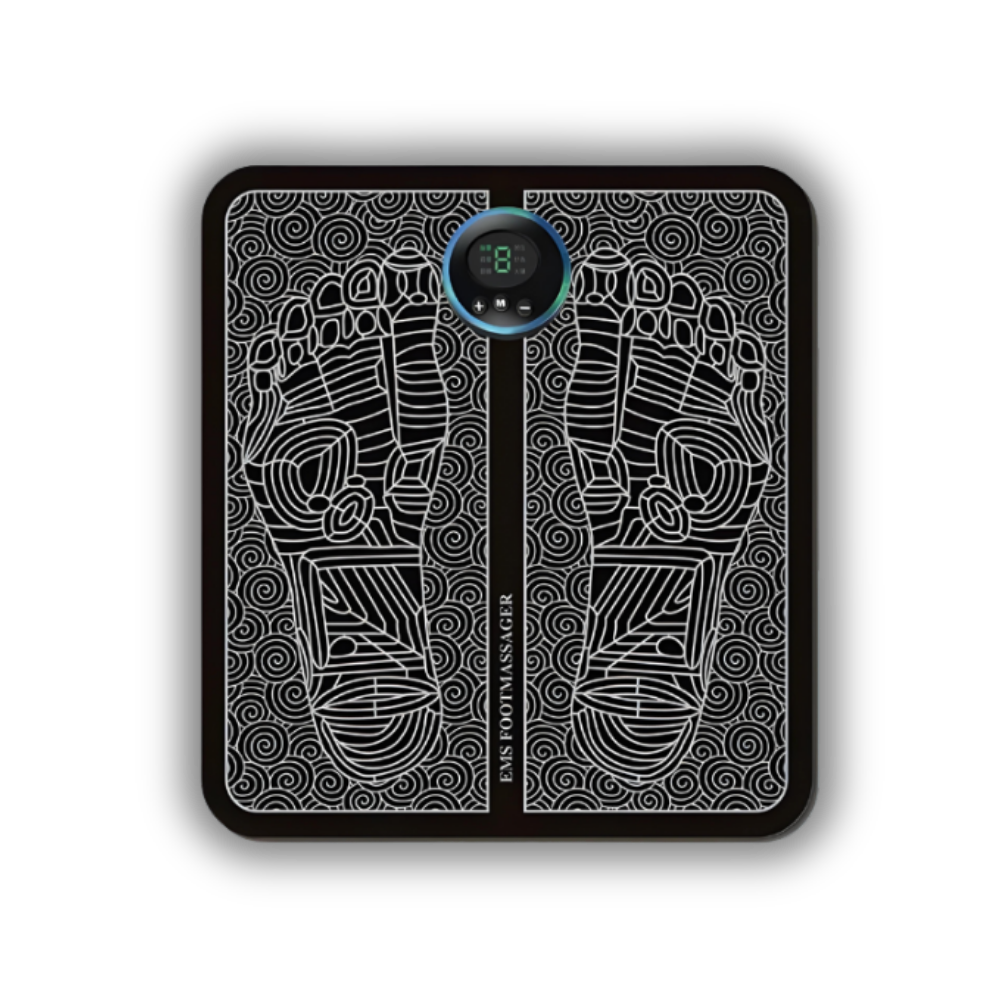
The one that worked was called Restural.
True EMS foot stimulator. Not a TENS unit. Not a vibrator. Actual electrical muscle stimulation with deep motor nerve penetration. All three requirements: deep motor neuron activation in the lifting muscles, reciprocal inhibition of the spastic calf, and sensory feedback that travels back up to the brain.
Built on the same protocols used in stroke gait rehabilitation clinics. One-time purchase. Under $60.
That is what I bought for Richard. That is what I put in front of his recliner. And that is what gave me my husband back.
The 90-Day Guarantee That Made Me Stop Hesitating
Here is what finally made me click "buy" at 2am that night. The guarantee.
Use Restural for 90 days. If your husband does not experience:
Noticeable reduction in foot drop and toe drag within 2 weeks
Looser calf and improved foot clearance within 30 days
You feeling less afraid within 60 days
...they refund every penny. No forms. No hassles.
I figured: we have spent $25,000 on things that did not work. What is $60 with a money-back guarantee?
But here is the thing the guarantee cannot do. It cannot give you back the mobility he loses while you wait. The motor pathways going quiet right now do not care about money-back policies.
P.S. I know you. You are the one still reading at 1am. You are the one who Googles "post-stroke foot drop getting worse" while he sleeps. You are the one who has memorized every threshold in your house that catches his toe. And you are exhausted. I was too. But I did not give up. And you are reading this right now because you have not given up either. That is not desperation. That is love doing research at midnight. Do not wait for the next brace fitting. Do not wait for the next Botox round. You already know those are not retraining his foot.
P.P.S. If his stroke was over a year ago and the foot drop has been getting worse, the window is narrowing every month. His next physical therapy session is days away. The next AFO will take weeks to fit. And it probably will not retrain the foot anyway. This arrives in days. The sooner his pathways get stimulus, the more recoverable they are. Do not wait for the system to fix what the system was never designed to fix. I waited two years. You do not have to.
P.P.P.S. I spent two years walking behind my husband like a bodyguard. Every doorway. Every threshold. Every trip to the bathroom. I was exhausted and terrified and I had stopped sleeping through the night. Eight weeks after I put the Restural in front of his chair, he walked to the letterbox and back by himself. Without the brace. Without the cane. I stood at the window and watched him. I did not follow. For the first time in two years, I did not follow. Sixty dollars. That is what it cost to stop being afraid every time he stood up.
NOTICE: As of January 2026 - The demand for Restural™ EMS Device has increased dramatically and inventory has been flying off the shelves.
Lock in your order while you can to Get An Extra 40% OFF + FAST SHIPPING
Limited Time Offer Ends Sunday
Hurry! Discount ends soon.
 90 Day Money Back Guarantee
 Free & Fast Worldwide Shipping
 Safe & Secure Checkout
 No-Hassle Returns
Comments
Wilma Devon
Has anyone tried this themselves? My husband had a stroke 18 months ago and the foot drop has just gotten worse. The AFO brace makes his leg feel like a peg. His PT keeps telling us "this is your new baseline" and I refuse to accept that. Thinking about ordering one.
Mary Vernon
I got this for my husband two weeks ago. He had his stroke 14 months ago and the foot drop was getting worse every month no matter how much PT we did. Yesterday he walked through the kitchen doorway without dragging his toe. I actually cried. It has only been two weeks but for the first time I feel like something is actually retraining his foot. Not just bracing it. RETRAINING it.
Robert Harmon
I am the stroke survivor. My wife showed me this article. I was skeptical because the AFO brace and Botox have been my whole life for two years. But the muscle contractions are real. Not buzzing, not tingling. The front of my shin actually lifts my toes. And my calf, the one that has been locked tight since the stroke, actually loosens during the session. Three weeks in and I am walking around the house without my brace. Did not think that was going to happen again.
Skyler Graig
How long does shipping take?? My dad's foot drop is getting worse and my mom is exhausted from being his full-time carer since his stroke. I want to get this to them ASAP.
Marie Campbell
Hey Skyler, I got mine in just under a week. My dad had a stroke last year and was skeptical but I just put it in front of his chair and told him twenty minutes. He has been using it every day since. Your parents will thank you.
Emma Jefferson
Got this for my father after his stroke. He was nervous about the pulses at first but relaxed into it after a few minutes. By day 3 he walked from the bedroom to the kitchen without his toe catching once, first time in MONTHS. But what really got me was when he said "I do not want to skip today." He has not been that motivated about anything since the stroke.
Gerald Whitmore
I am 71 and I have been dealing with foot drop since my stroke 3 years ago. My daughter sent me this thing for Christmas and I figured why not. I use it every morning for 20 minutes while I drink my coffee. The toe drag is not gone completely but I can walk through my house without catching the carpet at every door. My calf is looser than it has been in years. My wife says I look like myself again. That meant more to me than anything.
Debra Peyton
Bought this for my husband after his third fall in two months post-stroke. His rehab team had no answers beyond another AFO. He has been using it every day for about 6 weeks now. The falls went from 3 a month down to zero. But the real change? I stopped being afraid every time he stood up. Life changing. For both of us.
Paula Remington
My husband had his stroke 4 years ago. He ordered this himself after I read him this article. He said it was the first time something made sense about why his AFO never actually retrained his foot. He has been on it for a month and walks to the mailbox by himself now. Without the brace. I watch from the window but I do not follow him anymore. That is a sentence I never thought I would be able to say.