Why 80% of Parkinson's Patients Develop Uncontrollable Leg Movements. (And How This Device Calmed What $23,000 in Treatments Couldn't)
If your legs jerk, kick, twist, and flail without your permission, 1 to 2 hours after every dose of Levodopa, there's something your neurologist may not be telling you clearly enough:
Dyskinesia is not a Parkinson's symptom. It's a side effect of the very pills prescribed to treat your Parkinson's. The meds that give you control are taking it away in a different way.
And here's the cruel trap you're caught in:
Without your meds: frozen, stiff, tremoring, unable to move. With your meds: legs flailing, feet jerking, involuntary movements you can't stop. You're forced to choose between being frozen and being out of control. Between too little dopamine and too much. Between immobility and chaos.
The "therapeutic window" between "not enough" and "too much" shrinks every year. Eventually there's barely a gap between the dose that controls your Parkinson's and the dose that triggers your dyskinesia.
Up to 80% of Parkinson's patients develop dyskinesia within 5 to 10 years of Levodopa treatment. It's not a question of if. It's when.
The Side Effect Nobody Prepared You For
It starts subtle. A restlessness in one leg during peak dose. A foot that won't stay still. Then it progresses. Visible jerking. Kicking. Legs that twist and writhe 1 to 2 hours after each dose. Feet that shift and flick without your consent.
Research confirms dyskinesia appears in the legs first and is often more severe in the lower limbs than anywhere else. This is because the foot area corresponds to the region of the brain where dopaminergic loss occurs earliest.
The emotional devastation is worse than the physical. Your legs are moving without your permission. In public. At dinner. At your grandchild's recital. People stare. They think you're agitated or uncomfortable. You can't sit still. You can't stand still.
The pills that were supposed to give you control have taken control away in a different way.
And the longer it continues, the worse the muscle imbalance becomes. The stabilising muscles in your legs get weaker every month they go unactivated. Your legs lose the muscular counterbalance they need to resist the chaotic signals. The involuntary movements become more violent, more frequent, harder to manage.
The question isn't whether you'll do something about it. The question is whether you'll do it before your stabilising muscles waste away completely.
Why Every Treatment You've Tried Is Failing Your Legs
Dose reduction is the most common approach: lower the Levodopa to reduce dyskinesia. Problem? This brings back the Parkinson's symptoms. Less flailing but more freezing. Less jerking but more stiffness. You're trading one loss of control for another.
Amantadine (Gocovri) is the only FDA-approved drug specifically for dyskinesia. It works on the glutamate system. But it comes with side effects of its own: hallucinations, dizziness, constipation, swelling, insomnia. At $500 to $1,000+ per month, you're adding another pill with more side effects to manage a side effect of your existing pills.
Deep Brain Stimulation can reduce dyskinesia but requires $50,000 to $100,000, holes drilled in your skull, and carries risks of infection, bleeding, speech problems, and cognitive changes. Not available or appropriate for everyone.
Extended-release Levodopa (Duopa) delivers smoother dopamine through a surgically implanted tube into your intestine at $6,000 to $10,000 per month. For a side effect caused by the medication itself.
Every single one of these treatments targets the brain signal. Nobody is working on the legs.
Your stabilising muscles have been weakened by years of Parkinson's. There's nothing to counterbalance the involuntary firing. You can't smooth out a chaotic signal by adjusting the signal. You need stronger muscles to absorb it.
But here's what hundreds of dyskinesia patients discovered when they stopped adjusting the signal and started strengthening the muscles that receive it...
How EMS Rebalances Your Legs From the Outside In
Dyskinesia in the legs isn't just a brain signal problem. It's a muscle control problem. The involuntary movements happen because your leg muscles are responding to chaotic, fluctuating dopamine signals with no peripheral counterbalance. In healthy legs, when one muscle group contracts, the opposing group provides controlled resistance. That's what creates smooth, purposeful movement. In dyskinetic legs, the stabilising muscles are too weak and dormant to fight back. The result: uncontrolled movements with nothing to oppose them.
While you use Restural for just 20 minutes twice daily, four things happen simultaneously:
1. Strengthens Your Stabilising Muscles
EMS activates the antagonist muscle groups in your feet and calves that have been weakened by years of Parkinson's. Stronger stabilisers means more resistance to involuntary movements. Your legs finally have something to "push back" against the chaotic signals. Published research on whole-body EMS in Parkinson's patients confirmed improved muscle strength, endurance, and coordination.
2. Retrains Coordinated Muscle Firing
The rhythmic contraction-relaxation cycles of EMS re-establish the balanced alternating pattern between opposing muscle groups. Instead of one side firing chaotically with nothing to check it, both sides learn to work in sequence again. EMS co-activates agonist-antagonist muscles, which research specifically identifies as beneficial for rebalancing motor patterns.
3. Recalibrates Motor Output Through Rhythmic Input
Published research shows that rhythmic peripheral stimulation can modulate the motor output from the brain. EMS sends structured, predictable sensory signals back up the nervous system that help counteract the chaotic output causing dyskinesia. External rhythm imposed on the muscles helps organise the disorganised signals from the brain.
4. Activates the Peripheral Reflex Mechanism
A published study on 34 Parkinson's patients showed EMS significantly reduced involuntary movement amplitude (p<0.001). The mechanism: EMS activates Renshaw cells, inhibitory interneurons in the spinal cord, that provide negative feedback to overactive motor neurons. This dampens the involuntary firing at the spinal level before it ever reaches your muscles.
This is the same clinical-grade technology used in $6,000+ rehabilitation devices, at a fraction of the cost. It doesn't change your meds. It changes how your legs handle the signal your meds produce. Works alongside your existing treatment. Doesn't replace anything. Fills the gap nobody else is addressing.
But the longer dyskinesia goes unchecked, the worse the muscle imbalance becomes. The stabilising muscles get weaker every month. The earlier you build the muscular counterbalance, the better your legs handle the escalating signal chaos.
From Specialists Who've Watched Patients Get Trapped

"The hardest conversation I have is telling a patient that the very pills controlling their Parkinson's are now causing a new problem. Dyskinesia is medication-induced, and every tool we have to treat it either brings back the Parkinson's symptoms or adds more side effects. What's been missing from the conversation is peripheral muscle conditioning. These patients' stabilising muscles have been weakened by years of deconditioning, so when the chaotic dopamine signal arrives, there's nothing in the legs to oppose it. EMS addresses that gap directly. The patients who start early, while the muscle imbalance is still reversible, see the most dramatic improvements."
— Dr. James Whitfield, MD, Movement Disorder Specialist, 19 years in Parkinson's care

"I watch dyskinesia steal dignity. Patients stop going to restaurants because their legs won't stay still. They stop going to church. They eat alone. The emotional toll is devastating. What excites me about EMS for dyskinesia is that it works on the peripheral muscle system, the part everyone ignores. Published research showed EMS significantly reduced involuntary movement amplitude in Parkinson's patients. We're not adjusting the brain signal. We're giving the legs the strength and coordination to handle whatever signal arrives. That's a fundamentally different approach, and the results speak for themselves."
— Dr. Elena Torres, DPT, Neurological Rehabilitation, Phoenix

"My patients are trapped. Reduce the Levodopa and the Parkinson's comes roaring back. Keep it high and the dyskinesia gets worse. Amantadine helps some, but the hallucination risk is real. DBS is $65,000 and not right for everyone. EMS gives them a third option: keep your dose, keep your mobility, and let your legs learn to handle the signal. It doesn't replace any treatment. It fills the gap between the brain signal and the muscle response that nobody else is addressing. Non-invasive. No side effects. Works alongside everything they're already taking. At under $60, it's the easiest recommendation I make."
— Dr. David Park, MD, Physiatrist, Northwestern Rehabilitation Center

"I Knocked My Grandson's Drink Off the Table. The Room Went Quiet."
"I spent $23,000 over 7 years managing Parkinson's. Five different medication combinations. The Levodopa worked brilliantly for the first three years. Then the dyskinesia started. Subtle at first. My right leg would get restless about an hour after each dose. Within six months, both legs were jerking, kicking, twisting during every peak dose window.
My neurologist cut the Levodopa. The dyskinesia calmed down, but the Parkinson's came roaring back. Couldn't walk. Couldn't turn. Couldn't get out of a chair. So he raised it again. The flailing returned.
Tried amantadine. Gave me vivid hallucinations within a week. Saw people in my bedroom who weren't there. Stopped immediately. My neurologist discussed DBS. $65,000. Electrodes in my brain. I said no.
Then the dinner. Family gathering, six of us around the table. My grandson sitting next to me. My right leg jerked and caught the edge of the table. His orange juice went everywhere. The table went quiet. He looked scared. My daughter reached for the napkins. Nobody said anything. But everybody saw.
I stopped going to restaurants after that. Stopped going to church. Started eating alone in my study so nobody had to watch. My wife found me crying in the bathroom one night. 'I can't control my own legs. What's happening to me?'
Then I read about peripheral muscle stabilisation. How nobody was working on the legs. Everyone was adjusting the brain signal, but the legs had lost the muscular counterbalance to resist the chaotic signal. How EMS could retrain the stabilising muscles and give the legs something to push back with. I ordered Restural that week."
— Frank, 69, diagnosed 7 years ago, dyskinesia for 2 years
The $23,000 Question
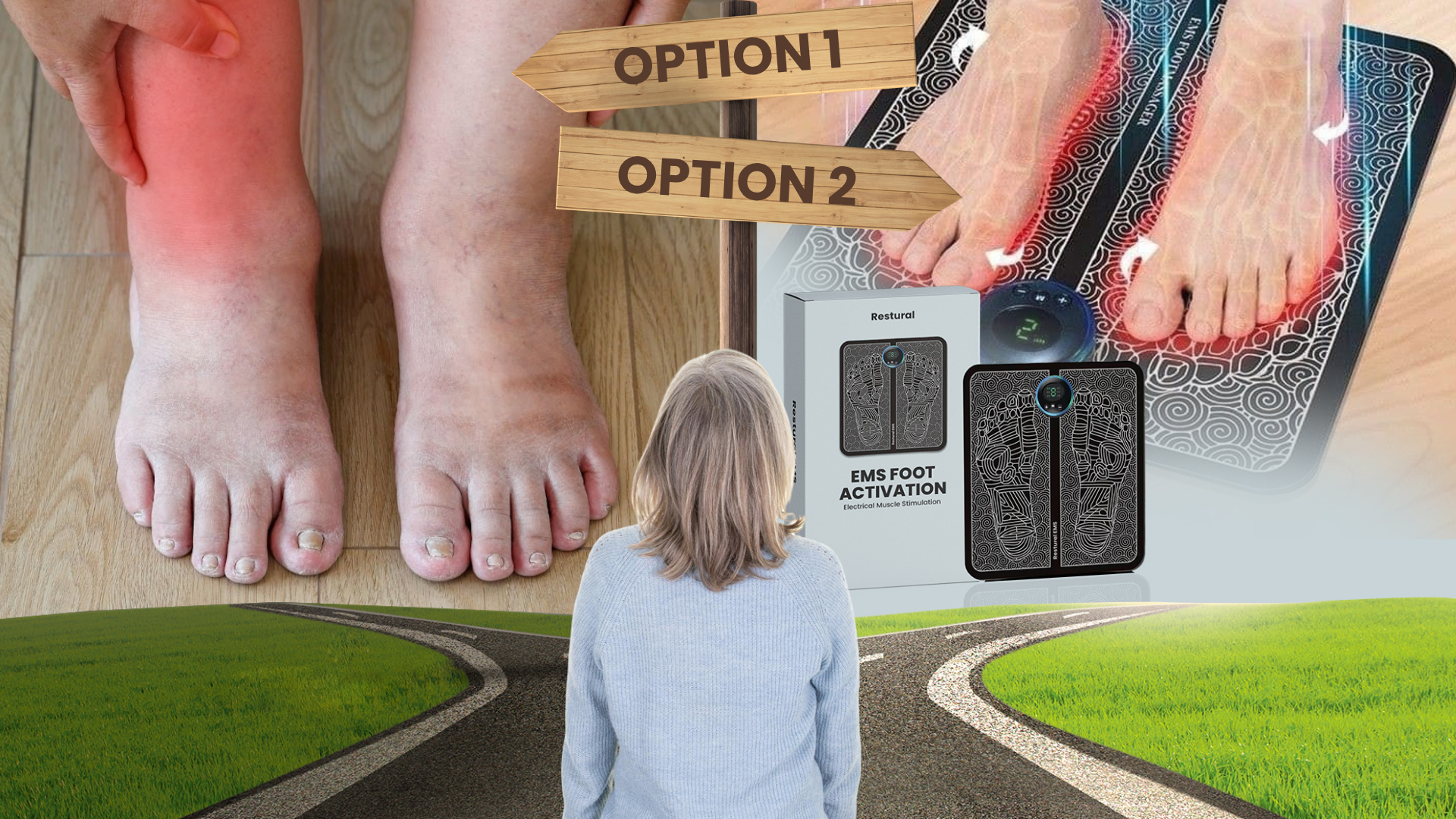
Option 1: Stay Trapped
Amantadine at $500 to $1,000+ per month with hallucination risk
Dose reductions that bring back the freezing
$50,000 to $100,000 brain surgery
Duopa pump at $6,000 to $10,000/month via intestinal tube
Your legs getting weaker every day
Cost: Your Dignity + $23,000+
Under $60
✓ Strengthens stabilising muscles to resist involuntary movement
✓ Non-invasive, zero side effects
✓ Works alongside your existing meds
✓ 90-day money-back guarantee
One-time purchase. 20 minutes a day.
Without meds: frozen. With meds: flailing. EMS gives you a third option.
How Much Longer Will You Let Your Legs Get Weaker?
Every month dyskinesia goes unaddressed, your stabilising muscles deteriorate further:
Year 1 of dyskinesia: Stabilisers are weakened but recoverable. EMS response is rapid. 4 to 6 weeks for meaningful improvement.
Years 1 to 3: More significant deconditioning. 6 to 10 weeks. Still very achievable.
Year 3+: Substantial muscle wasting. Recovery slower and may not be as complete.
Dyskinesia also tends to worsen over time as Levodopa doses increase with disease progression. The earlier you build the muscular counterbalance, the better your legs handle the escalating signal chaos.
The solution exists. The research supports it. The question is whether you'll start before your stabilising muscles waste away completely.
The 90-Day Confidence Guarantee
Use Restural for 90 days. If you don't experience:
Noticeably shorter and milder dyskinesia episodes within 4 weeks
Ability to sit through a meal without involuntary leg movement within 6 weeks
Measurable reduction in dyskinesia severity within 90 days
We'll refund every penny. No forms. No hassles.
The guarantee removes your financial risk. But it can't rebuild the stabilising muscles that are wasting away while you wait.
Here's Frank's Week-by-Week Transformation (And What You Can Expect)
Week 1
Strapped it on, skeptical. Twenty minutes, felt the stabilising muscles in my feet and calves engage. Rhythmic, controlled contractions. Not painful, almost like a structured workout for muscles I'd forgotten I had. My legs felt different afterward. Steadier. "My legs are being taught how to behave again."
Week 2
Peak-dose dyskinesia episodes noticeably shorter in duration. The involuntary movements were still there, but less violent. My right leg still kicked, but it was more of a twitch than a jerk. My wife noticed before I did. "It's like the volume has been turned down." That's exactly what it felt like.
Week 4
Sat through a full meal without my legs jerking. My wife and I went to dinner for the first time in five months. Sat in a booth. Legs stayed calm. Not perfectly still, but calm. No kicking the table. No stares from other diners. She held my hand across the table and said, "Welcome back." I almost lost it right there.
Week 8
Dyskinesia episodes reduced by about half. When they do occur, they're milder and shorter. The stabilising muscles are strong enough to partially counteract the chaotic signals. Went to my grandson's soccer game. Sat in the bleachers for 90 minutes. Legs behaved. He scored and I stood up to cheer. My legs held. "I have my legs back. Not perfectly. But enough to live like a person again."

GET RESTURAL NOW. BEFORE YOUR STABILISING MUSCLES WASTE AWAY COMPLETELY
Customer Reviews
 4.8 out of 5
3,791 customer ratings
 90 Day Money Back Guarantee
 Free & Fast Worldwide Shipping
 Safe & Secure Checkout
 No-Hassle Returns
P.S. If you're still reading this, your legs are still moving without your permission. And if the dose adjustments, the amantadine, or the "wait and see" approach were going to fix it, they would have fixed it by now. Every treatment you've tried targets the brain signal. Nobody is strengthening the legs that receive it. Restural fills that gap. Non-invasive. Zero side effects. Works alongside everything you're already taking. Your neurologist manages the brain. EMS manages the legs. Both matter.
P.P.S. Frank knocked his grandson's drink off the table with an involuntary leg jerk. The room went quiet. He started eating alone after that. He caught his window. The stabilising muscles were still recoverable. The only question is: Will you catch yours?
NOTICE: As of March 2026, demand for Restural EMS has increased dramatically and inventory has been flying off the shelves.
Lock in your order while you can to Get An Extra 40% OFF + FAST SHIPPING
Limited Time Offer Ends Sunday
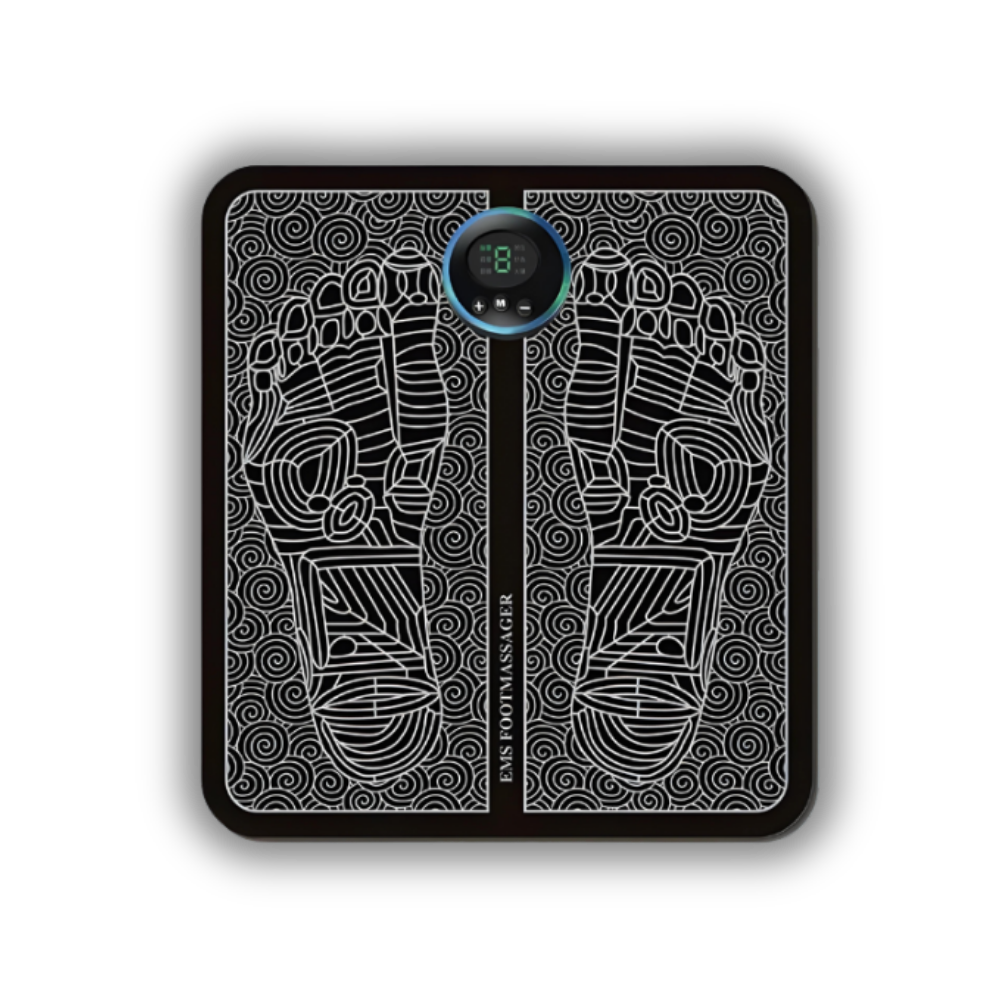
Hurry! Discount ends soon.
90 Day Money Back GuaranteeFree & Fast Worldwide ShippingSafe & Secure CheckoutNo-Hassle ReturnsRecommended
GET 40% OFF NOW
Customer Reviews
★★★★★
By Feature
Comments
Wilma Devon
Has anyone with dyskinesia actually tried this?? My dad's legs jerk so bad during peak dose he can't sit through dinner. His neurologist just keeps adjusting the Levodopa but nothing helps.
Mary Vernon
My husband developed dyskinesia about 18 months ago. His legs would flail during every peak dose. He's been using this twice a day for three weeks and the episodes are noticeably calmer. He sat through Sunday lunch yesterday without a single leg jerk. First time in months. We're cautiously optimistic.
Doris James
My husband tried amantadine for his dyskinesia and got terrible hallucinations. His neurologist had no other options except reducing the Levodopa, which brought back all his Parkinson's symptoms. Found this in a support group. He's been using it daily and genuinely believes the involuntary movements are shorter and less intense. We're so grateful.
Skyler Graig
How long does shipping take?? My mom's dyskinesia is getting worse every month and I want to get this to her ASAP.
Marie Campbell
Hey Skyler, I got mine in just under a week. My dad started using it the same day it arrived. His dyskinesia was so bad he was desperate to try anything.
Emma Jefferson
Got this for my father who has terrible dyskinesia in his legs. He was nervous about the pulses but after a few minutes he relaxed into it. By week 2 his involuntary movements during peak dose were noticeably less violent. By week 4 he sat through my daughter's school concert without his legs moving once. He cried in the car afterward. He hadn't been able to do that in over a year. Wish we'd found this sooner!!
Rosie Herbert
My neurologist couldn't help with the dyskinesia without cutting my Levodopa, which made everything worse. Figured this was worth a shot. Just ordered one.
Debra Peyton
If you have dyskinesia and you're trapped between frozen and flailing, just get one. My husband went from legs jerking 10+ times during every peak dose to maybe 2 or 3 mild twitches. He can sit through dinner again. Life changing.
Paula Remington
Bought this for my wife whose dyskinesia was so bad she stopped leaving the house. She was embarrassed by the leg movements in public. After five weeks of using it twice a day, the episodes are calmer, shorter, and she actually went to our neighbour's birthday party last weekend. Sat in a chair the whole evening. No flailing. She was beaming. We would recommend this to anyone dealing with dyskinesia. Truly amazing.