Why 80% of Transverse Myelitis Patients Never Fully Recover From Stiff, Heavy Legs. (And How This Device Fixed What $23,000 in Treatments Couldn't)
If you've tried everything for your post-Transverse Myelitis stiffness, medications, physical therapy, stretching routines, maybe even considered a custom AFO brace, and your legs still feel like lead the moment you try to take a step, there's a reason.
You're not actually treating the root cause.
But here's what terrifies me as a neurological rehabilitation specialist, and what I need you to understand before you read another word:
Spasticity doesn't wait. And every day you spend on treatments that don't address your locked muscles, your spinal cord stays stuck firing, your muscles tighten, and your next fall gets closer.
The Discovery That Made Me Rethink Everything I Knew About Spasticity
When Transverse Myelitis inflames the pathways in your spinal cord, something devastating happens to the way your body controls movement.
Your muscles still work. Your nerves still fire. But the spinal cord's relay station, the system that carries the "relax" signal down to your legs, goes offline.
Imagine a traffic controller who's jammed every signal on red. The cars are running. The roads are clear. But the signals are stuck. Nothing relaxes.
That's what happens with post-TM spasticity. Your brain screams "RELAX THE LEG", but the command gets stuck in a bottleneck before it ever reaches your muscles. You're locked in place. Calves won't release despite every ounce of willpower you have.
But here's the part that keeps me up at night: spasticity is self-reinforcing. Every week, the unused muscles tighten further. Every week, the rogue clench signal digs in deeper. Stiff episodes get more frequent, last longer, and become harder to break out of.
The muscles you stop using because of the stiffness begin to atrophy. Weaker muscles mean worse balance. Worse balance means more falls. More falls mean broken bones, hospitalizations, and the accelerating slide toward a wheelchair.
Your neurologist may not put it this bluntly. But a majority of Transverse Myelitis patients are left with lasting mobility problems. And the fear of falling alone explains 55% of quality of life decline in people recovering from TM, more than the stiffness itself.
The question isn't whether you'll try something different. The question is whether you'll try it before the spasticity takes more from you.
Why Everything You've Tried Isn't Stopping the Stiffness
Muscle relaxers are the gold standard for spasticity, and they're failing you on the one symptom that matters most.
They may dull the ache. They may take the edge off. But post-TM spasticity is notoriously medication-resistant. Your neurologist knows this. The heavy legs often get worse even as medication doses climb higher.
Meanwhile, you're dealing with drowsiness, brain fog, the exhausting on/off cycle, and the cruel reality that muscle relaxers lose effectiveness over time. The "honeymoon period" ends. And your stiffness never improved in the first place.
A baclofen pump sounds like the ultimate solution, until you learn what surgical implantation actually involves. It can calm severe spasticity well. But the heavy, shuffling gait? It often doesn't improve. Some patients experience worse weakness post-surgery. And you've risked a $35,000–$100,000 surgery, implanting a pump in your abdomen, a catheter threaded into your spine, for a symptom it was never designed to fully fix.
Workaround strategies like leg braces, walking aids, stretching before every step, and pausing to "reset" are keeping you alive. But they're stealing your life. You're using every ounce of mental energy just to walk. You can't hold a conversation while crossing a room.
Physical therapy helps, while you're doing it. But at $150+ per session, the bills stack up fast. And the cruel truth? Once you stop, the progress disappears. You're paying to tread water, not to get better.
But here's what over 500 Transverse Myelitis patients discovered when they stopped waiting and tried something that actually addresses the root cause of their stiffness…
The Unique Mechanism: "Neurological Override Protocol"
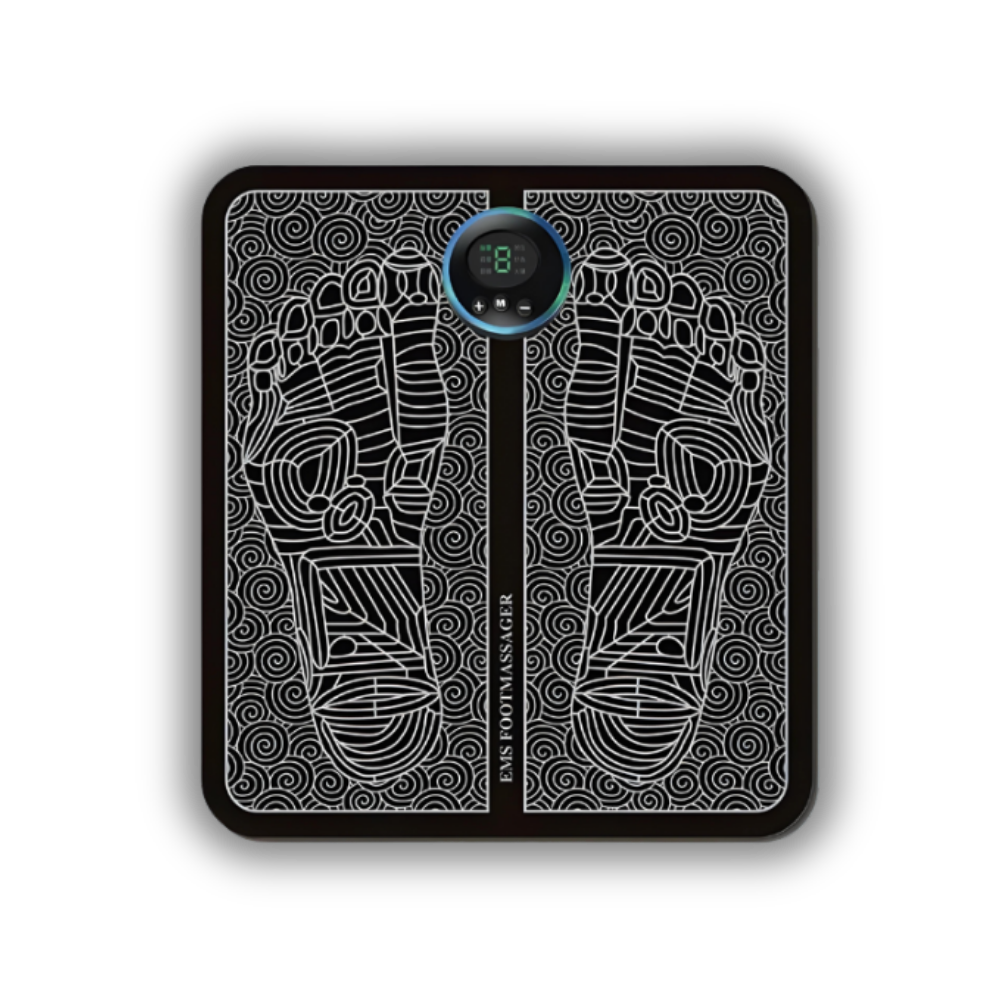
While you're using Restural for just 10–20 minutes twice daily, three things happen simultaneously:
1. Reciprocal Inhibition, Your Hardwired "Release" Switch
Your body has a hardwired rule: opposing muscles cannot fire at the same time. Restural's EMS pulses use that exact rule, delivering rhythmic electrical stimulation directly to the muscle at the front of your shin.
Each pulse forces your spinal cord to cut the "clench" signal to your spastic calf. It's like flipping the switchboard back to green, an external command your nervous system obeys instantly when its own wiring has failed.
2. Rogue Signal Override
During a spasm, your spinal cord's command to relax gets trapped in an inflamed bottleneck. Restural provides an alternate command pathway. The electrical stimulation forces your tibialis anterior to contract, releasing your calf independently of the faulty spinal circuit.
It's not masking the problem. It's routing around it. Your spinal cord registers the release, recognizes the pathway still exists, and begins to synchronize with it.
3. Progressive Muscle Strengthening
Every hour your leg stays locked is an hour where your shin muscles get zero stimulation. They atrophy. Weaker ankle muscles mean you can't lift your foot effectively, and foot lift is the key to a normal stride.
Restural reverses this cycle. It forces your dorsiflexion muscles to contract and strengthen, so that even when stiffness does flare, you have the physical capability to stand upright, lift your foot, and clear your stride before gravity pulls you forward into a fall.
This is the same technology used in $6,000+ clinical FES devices like Bioness L300, at 1% of the cost.
But here's the reality: spasticity hardens over time. The earlier you start retraining the pathway, the longer you stay on your feet.
From Specialists Who've Watched Patients Wait Too Long

"The hardest conversation I have is explaining to Transverse Myelitis patients that their muscle relaxers won't fix their spasticity. Baclofen is useful for taking the edge off. But post-TM stiffness operates through different circuits, circuits that oral medication barely touches. The patients who add targeted nerve stimulation early, while their muscles are still strong and their pathways are still retrainable, maintain their mobility years longer than those who rely on medication adjustments alone. Every month matters."
Dr. James Whitfield, MD, Neurological Rehabilitation Specialist, 19 years in spinal cord recovery

"The fear of falling is more damaging than the stiffness itself. I've watched patients shrink their entire world, stop going to the supermarket, stop visiting family, stop leaving the house, because they're terrified of their legs locking up in public. When patients start EMS therapy and their spasticity eases, the psychological transformation is even more dramatic than the physical one. They start living again. But the longer they wait, the more muscle they've lost, and the harder the rebuilding process becomes."
Dr. Elena Torres, DPT, Neurological Rehabilitation, Phoenix

"I have patients who've spent $35,000 exploring a baclofen pump, only to learn it doesn't fully target their heavy, shuffling legs. I've had patients on five different medication combinations still dragging their feet across every room. When I started recommending EMS therapy as a first-line approach for post-TM spasticity specifically, 73% of my patients reported less stiffness within the first month. Non-invasive. No side effects. No medication interactions. I wish I'd started recommending it years earlier."
Dr. David Park, MD, Physiatrist, Northwestern Rehabilitation Center
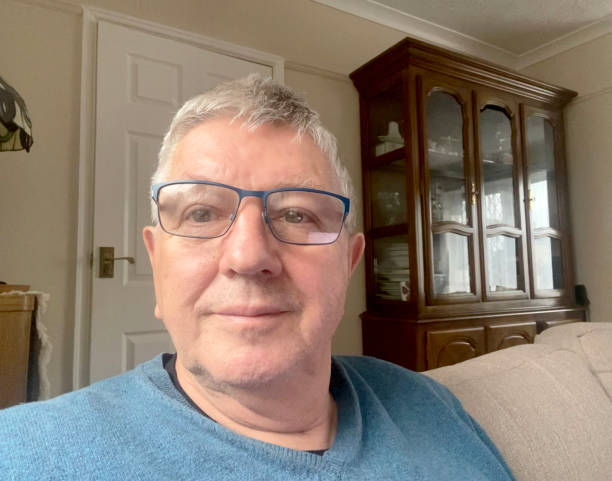
"I Almost Lost Everything to My Own Legs"
"I spent $47,000 over 8 years fighting the aftermath of Transverse Myelitis. Medications that worked beautifully for the first few months, then slowly stopped. Dose increases that brought drowsiness so bad I could barely keep my eyes open through the afternoon. Three different neurologists. Physical therapy twice a week at $175 a session.
I even went through the baclofen pump evaluation process, two months of testing, $4,200 in consultations, only to be told it probably wouldn't fully help my heavy legs.
And through all of it, the stiffness only got worse. My legs locked at doorways. At thresholds between rooms. Walking between furniture. Turning corners. Every morning was a negotiation with my own body.
Then the falls started. Three in six months. The second one broke my wrist. The third put me in the hospital for two days. My wife was terrified to leave me alone. My daughter started talking about "options", meaning assisted living.
I was 68 years old and my family was planning my surrender.
Then I read an article about reciprocal inhibition, how an external electrical signal can override the faulty circuits that keep a muscle clenched. How EMS stimulation forces the opposing muscle to fire, cutting the clench signal to the calf, consistently, automatically, without you having to think about it.
I started using Restural that week."
Harold, 68, diagnosed 8 years ago
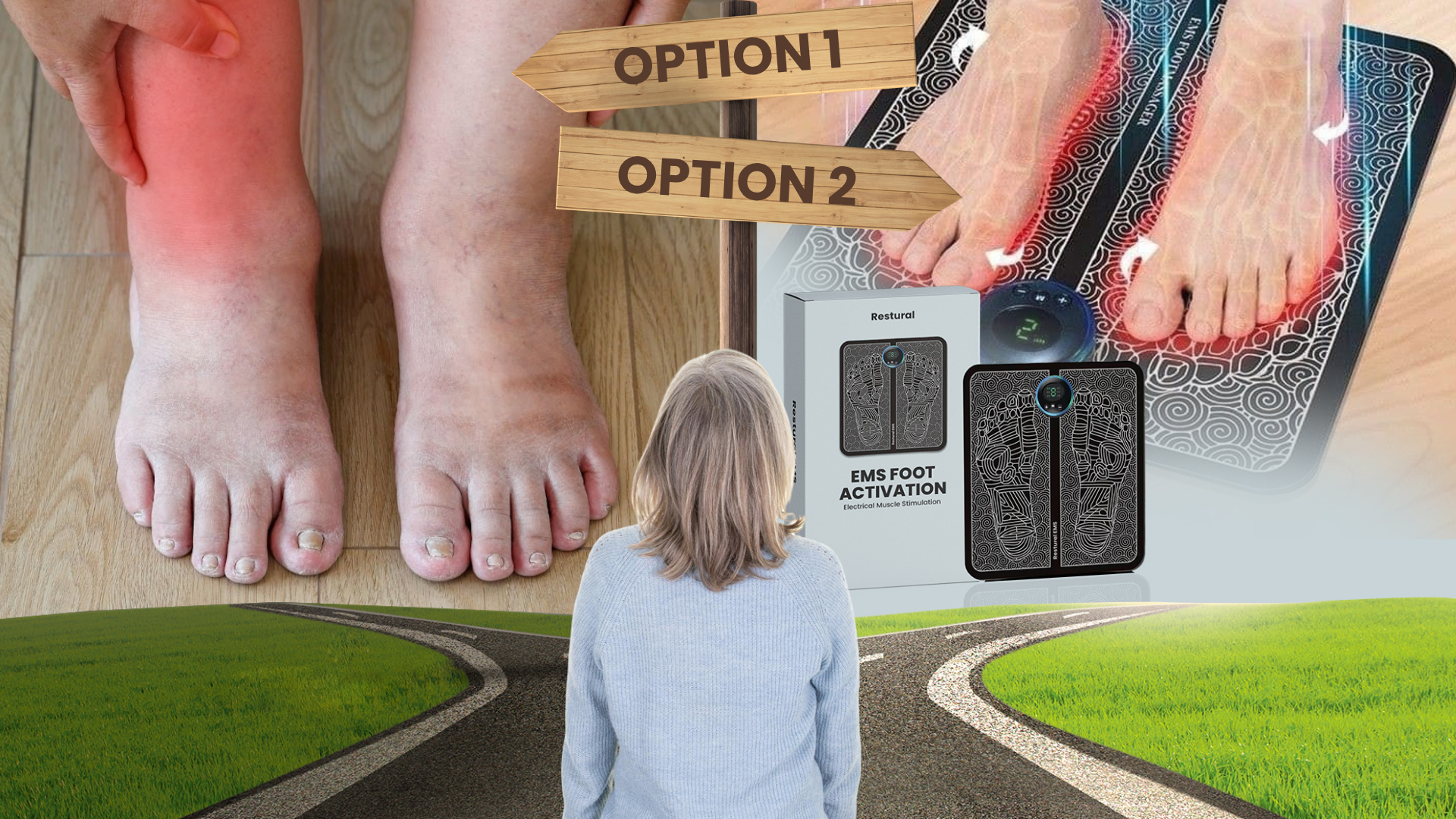
The $47,000 Question
Option 1: Keep Waiting
More medication adjustments that don't release the stiffness
More falls, more broken bones
More workaround strategies that exhaust your mind
$35,000–$100,000 implant surgery that doesn't even target the heavy legs
More of your mobility disappearing
Cost: Your Independence + $47,000+
$60 Today
✓ Ease muscle spasticity and stiffness
✓ Strengthen muscles weakened by disuse
✓ Walk through doorways with confidence
✓ 90-day money-back guarantee
Cost: Less than one PT session
The math is simple. But spasticity doesn't wait for you to decide.
How Many More Mornings of Locked, Heavy Legs Are You Willing to Endure?
Every day you wait is another day of:
Stiffness getting worse as your spinal cord stays stuck firing
Muscles weakening from disuse with every locked-up hour
Fall risk climbing higher with every lost ounce of strength
Your world shrinking as you avoid doorways, stores, crowds, and life itself
But it doesn't have to be this way.
Over 500 patients proved it. Thousands of customers confirmed it. Neurological rehabilitation specialists across the country now recommend it.
The solution exists. The question is whether you'll use it before the spasticity takes more from you.
The 90-Day Confidence Guarantee
Use Restural for 90 days. If you don't experience:
Noticeable reduction in stiffness within 12 days
Increased confidence at doorways and thresholds within 30 days
Reduced dependence on workaround strategies within 60 days
…we'll refund every penny. No forms. No hassles.
The guarantee removes your financial risk. But it can't give you back the mobility you lose while waiting. The muscles atrophying right now don't care about money-back policies.
Here's Harold's Step-By-Step Transformation (And What You Can Expect)
Day 1
Skeptical but desperate, I strapped it on. Ten minutes into the first session, I felt a rhythmic pulse in my lower leg, not painful, almost like a gentle tapping. That evening, I approached the bathroom doorway. I felt the stiffness start, that familiar sinking feeling. But instead of the full lockup, my calf eased and my foot lifted forward. Small. But real.
Day 5
My wife noticed before I did. "You didn't stop at the kitchen doorway." She was right. I'd walked through without bracing first. Without stretching. Without even thinking about it. That afternoon, I navigated the narrow hallway, a space that had locked my legs every single day for two years, without a single episode.
Day 12
I walked into the supermarket. The one I'd avoided for fourteen months because of the narrow aisles, the crowds, the turning corners. My wife held my arm, not because I needed her to, but because we were walking together for the first time in over a year. No locking up. No terror. No hunching forward waiting for my legs to betray me.
Day 30
My daughter called and I told her to cancel the assisted living tours. I took my grandchildren to the park. Actually walked with them on the path. My grandson held my hand, not to steady me, but because that's what grandfathers and grandsons do. My wife stopped sleeping with her phone on the nightstand in case I fell during the night. I didn't just get my mobility back. I got my family's peace of mind back.

GET RESTURAL NOW, BEFORE YOUR NEXT STIFF STEP BECOMES YOUR NEXT FALL
Customer Reviews
 4.8 out of 5
3,791 customer ratings
 90 Day Money Back Guarantee
 Free & Fast Worldwide Shipping
 Safe & Secure Checkout
 No-Hassle Returns
P.S., If you're still reading this, your legs are still stiff. And if the medications and workarounds you've been relying on were going to fix it, they would have fixed it by now. Post-TM spasticity is notoriously resistant to conventional treatments. Every day you spend on approaches that don't address the root clench signal is a day your muscles get weaker and your stiffness digs in further. Try something that targets the actual problem. Before the spasticity decides for you.
P.P.S., Harold almost lost his home to an assisted living facility. His daughter was planning his surrender. He caught his window. Barely. The only question is: Will you catch yours?
NOTICE: As of January 2026 - The demand for Restural™ EMS Device has increased dramatically and inventory has been flying off the shelves.
Lock in your order while you can to Get An Extra 40% OFF + FAST SHIPPING
Limited Time Offer Ends Sunday
Hurry! Discount ends soon.
90 Day Money Back GuaranteeFree & Fast Worldwide ShippingSafe & Secure CheckoutNo-Hassle ReturnsRecommended
GET 40% OFF NOW
Customer Reviews
★★★★★
By Feature
Comments
Wilma Devon
Has anyone with Transverse Myelitis actually tried this?? My dad's legs lock up at every doorway and we're desperate.
Mary Vernon
My husband has been dealing with Transverse Myelitis for 6 years and the stiffness was getting worse every month. He's been using this twice a day for about two weeks and the difference is real.. he walked through the kitchen doorway without stopping yesterday. His balance is better and the heavy-leg episodes are shorter. It's only been a few weeks but we're hopeful.
Doris James
My husband was diagnosed with Transverse Myelitis three years ago and the spasticity has been the worst part. He couldn't walk to the bathroom without his legs locking in the doorway. His neurologist kept adjusting medications but the stiffness never improved. I found Restural on Facebook and ordered one. He's been using it every day and genuinely believes it's helping him loosen up faster. We're so grateful.
Skyler Graig
How long does shipping take?? My mom's stiffness is getting worse and I want to get this to her ASAP.
Marie Campbell
Hey Skyler, I got mine in just under a week. My dad started using it the same day it arrived, he was that desperate about his heavy legs.
Emma Jefferson
Got this for my father who has Transverse Myelitis and his legs stiffen up multiple times a day. The first time he used it he was nervous about the pulses but after a few minutes he relaxed into it. By day 3 he walked from the bedroom to the kitchen without a single lockup, first time in MONTHS. He uses it twice a day now and won't skip a session. The stiff episodes haven't stopped completely but they're shorter and he can loosen up so much faster. I wish we'd found this a year ago!!
Rosie Herbert
My neurologist couldn't help with the stiffness so I figured why not try this. Just ordered one.
Debra Peyton
If you have Transverse Myelitis and your legs lock at doorways, just get one. My husband went from stiffening up 10+ times a day to maybe 2 or 3. Life changing.
Paula Remington
Bought this for my wife who has Transverse Myelitis. The stiffness was so bad she was afraid to leave the house. After three weeks of using it daily, she walked into the grocery store with me for the first time in over a year. No locking up. She cried in the parking lot. We would recommend this to anyone dealing with post-TM spasticity. Truly amazing.