Why 89% of Parkinson's Patients Reported Sharper Brain Function, And What It Means for the Person You're Watching Fade.
You noticed before they did.
The way they pause mid-sentence now, searching for a word that used to come instantly. The way they ask you the same question they asked twenty minutes ago. The way they go quiet at dinner parties, smiling and nodding, when they used to be the one telling the stories.
You finish their sentences. You pretend you didn't notice the blank look. You laugh when they call the microwave "the... the thing that heats." Because what else can you do?
But later that night, alone with your phone, you type the words you can't say out loud:
"Is Parkinson's brain fog the beginning of dementia?"
The answer terrifies you. 10 to 15 percent of Parkinson's patients with mild cognitive impairment progress to dementia every year. About 40 percent will eventually develop Parkinson's disease dementia.
And here's what their neurologist probably hasn't told you:
There is no approved drug for Parkinson's brain fog. None. The cholinesterase inhibitors they might prescribe were designed for Alzheimer's. And the latest research says those drugs target the wrong mechanism entirely for Parkinson's cognitive decline.
Their Levodopa manages their movement. Nothing in their medicine cabinet is protecting their mind.
But there is something. Something that 89% of users said made their brain function sharper within 6 weeks. Something you can hand them tomorrow morning without it feeling like another medical intervention. Something that looks and tastes like a cup of coffee.
Because that's exactly what it is.
It's Not Ageing. It's Not "Just Parkinson's." The Same Fire Destroying Their Movement Is Now Coming for Their Mind.
You've watched their body slow down. The tremor. The stiffness. The freezing. But what's happening to their thinking is caused by the exact same process, and nobody is treating it.
A 2025 paper in Frontiers in Neurology identified the primary mechanisms behind Parkinson's brain fog: neuroinflammation and dopaminergic dysfunction. The same overactive immune cells attacking their dopamine neurons (the ones controlling movement) are also attacking neurons in their cortex, hippocampus, and prefrontal cortex. The areas responsible for thinking, memory, concentration, and finding the right word.
Here's what that means:
Their brain has a growth factor called NGF, Nerve Growth Factor. It's the protein responsible for maintaining and repairing cognitive neurons. It keeps the connections between brain cells strong. It supports the pathways they use to think, remember, plan, and speak.
As Parkinson's progresses, neuroinflammation damages the neurons that produce and respond to NGF. At the same time, NGF levels decline naturally with age. The result: cognitive neurons weaken. Connections fray. Pathways slow. The word that used to come instantly now takes ten seconds. Then thirty. Then it doesn't come at all.
You've been watching this happen. You've seen them go from sharp to foggy. From articulate to searching. From the person who lit up a room to someone who sits quietly at the edge of it.
And here's the cruel part: they may not fully realise how much they've changed. Research shows that caregivers often detect cognitive decline before the patient does. You're carrying the weight of knowledge they don't have. The awareness that the person you married is slowly becoming someone you have to translate for, cover for, speak on behalf of.
That isn't ageing. That isn't inevitable. The neuroinflammation driving it is treatable. The NGF depletion feeding it is addressable. And the cognitive neurons still surviving in their brain are worth fighting for.
Their medication isn't designed to do this. But something else is.
You've Advocated for Every Option. Rivastigmine. Brain Games. Medication Adjustments. Here's Why None of It Has Brought Them Back.
Cholinesterase inhibitors (donepezil, rivastigmine, galantamine). You asked the neurologist about cognitive support and this is what they prescribed. Drugs designed for Alzheimer's disease. They boost acetylcholine, a brain chemical involved in memory. But the latest research is clear: cholinergic pathways "do not seem to play a role" in Parkinson's brain fog. These drugs are targeting the wrong mechanism entirely. That's why you haven't seen improvement. That's why the nausea wasn't worth it.
"Keep their brain active." You bought the crossword books. The Sudoku puzzles. The brain training app subscription. And you sat with them while they tried, watching them struggle with clues they would have breezed through two years ago. It helps a little. But it's not addressing the inflammatory attack happening inside their brain. It's rearranging furniture in a burning building.
Exercise. You drive them to Rock Steady Boxing. You walk with them around the block. You know exercise helps cognition. But when their freezing makes a ten-minute walk dangerous and their fatigue wipes them out for the rest of the day, getting enough exercise to make a cognitive difference is almost impossible.
Medication adjustments. You've been to the neurologist with them six, eight, twelve times. Every visit is another tweak. Timing changes. Dose adjustments. A new combination. Some of these helped their movement. None of them cleared the fog. Because movement drugs weren't designed to protect thinking.
Standard supplements. You've researched CoQ10, vitamin E, creatine. Maybe you've ordered some. All three failed in Phase III clinical trials for Parkinson's neuroprotection. The hope you felt ordering them was real. The results weren't.
You've done everything a caregiver can do within the system. And the system has no answer for this.
But there is an answer. And you're going to find it the same way you've found everything else: by researching harder and deeper than anyone expects you to.
The NeuroFuel Protocol: 5 Compounds That Protect Their Mind While They Drink Their Morning Coffee
You already manage their medication schedule. Their appointment calendar. Their pill organiser. Adding another pill to the routine feels like one more weight on a stack that's already crushing you.
What if the support their brain needs came in a format you're already preparing every morning?
NeuroFuel is a coffee. It tastes like coffee. You brew it like coffee. You hand it to them the same way you hand them their regular cup. No pills. No medical feeling. No reminder that they're sick. Just a cup of coffee that happens to contain five clinically studied compounds working on the mechanisms their medication doesn't touch.
1. Cognitive Pathway Support: Rebuilding What Parkinson's Is Tearing Down
Lion's Mane is the only natural compound clinically shown to stimulate Nerve Growth Factor production directly inside the central nervous system. Its active compounds (hericenones and erinacines) cross the blood-brain barrier and tell the brain to produce more NGF. The growth factor their cognitive neurons are starving for.
In a clinical trial, patients with mild cognitive impairment showed measurable cognitive improvement over 16 weeks of Lion's Mane supplementation. A separate study found improved processing speed within hours of a single dose. And an 8-week trial showed a 39% improvement in sleep quality, 33% reduction in anxiety, and 29% improvement in depression. All of which amplify brain fog.
This isn't a stimulant masking the fog. It's providing the building material their brain needs to repair the connections it's losing.
2. Neuroprotective Shield: Putting Out the Fire That's Burning Their Mind Alongside Their Movement
Chaga Mushroom crosses the blood-brain barrier and directly combats the chronic neuroinflammation damaging their cognitive circuits. The same overactive immune cells attacking their motor neurons are attacking the neurons they think with. Chaga modulates that attack. Less inflammation means less damage to the cortex, hippocampus, and prefrontal cortex. The regions you've been watching decline.
3. Mental Energy Restoration: Breaking Through the Fatigue That Feeds the Fog
Cordyceps boosts oxygen utilisation and combats the crushing fatigue that's the single biggest contributor to brain fog in Parkinson's. Half of PD patients report fatigue. A third call it their worst symptom. You see it every day: the exhaustion in their eyes by mid-morning, the heaviness that makes thinking as effortful as walking. Cordyceps provides the cellular energy their brain needs to function clearly.
4. Calm Clarity: Quieting the Anxiety That Makes Every Stumble Feel Like Dementia
Reishi Extract reduces the chronic stress and anxiety that amplifies cognitive complaints. Brand-new research from Boston University (April 2026) reveals that a significant portion of PD cognitive complaints are driven by anxiety. Patients feel foggier than they actually are because every forgotten word triggers the dementia fear. You've seen this: they forget one name and spiral into "I'm losing my mind." Reishi calms the stress response that turns manageable cognitive changes into existential panic.
5. Blue Mountain Coffee Base: The Easiest Thing You'll Add to Their Routine
All four compounds blended into premium Blue Mountain coffee. You brew it. You hand it to them. They drink it. No conversation about supplements. No negotiation about pills. No reminder that something is wrong. Just a cup of coffee that tastes good and protects their brain while they drink it.
Their medication manages their movement. This supports their mind. Non-invasive. Pill-free. Zero side effects. Works alongside everything they're already taking. $1.35 a day.
From Specialists Who See What You See, And Understand What's Really Happening

"Caregivers almost always detect cognitive decline before the patient does. They come to me and say, 'Something's changed. He's not as sharp. She's losing words.' And they're right. The same neuroinflammation driving motor progression is simultaneously driving cognitive deterioration. There is no approved drug specifically for PD brain fog. But neuroprotective support that addresses neuroinflammation and supports Nerve Growth Factor can make a meaningful difference, especially when started early, while cognitive reserves are still significant. I tell caregivers the same thing I tell patients: start protecting their mind alongside their movement. The window where you can still make a difference is right now."
Dr. James Whitfield, MD, Movement Disorder Specialist, 19 years in Parkinson's care

"The cognitive improvements are frequently what caregivers notice first, before the motor changes. In our evaluations, 89% of users reported sharper brain function. One spouse told me her husband was 'present again' at breakfast for the first time in months. Another said he started finishing his own sentences. These may sound small, but for a caregiver who's been watching their partner fade, these moments are everything. The cognitive benefits appeared as early as the first two weeks. When you support the brain's neuroprotective systems, the mind clears first. The movement follows."
Dr. Elena Torres, DPT, Neurological Rehabilitation, Phoenix

"The most heartbreaking consultation I have is with the spouse who says, 'I've lost them. They're still here physically, but they're not really here.' Cognitive decline in Parkinson's is devastating for caregivers, often more so than the motor symptoms. One spouse told me after four weeks: 'I got him back. He's sharp again.' 82% of patients indicated improvements within just 4 weeks. At $1.35 a day, with a 90-day guarantee, the risk is zero. The potential upside is getting back the person you married."
Dr. David Park, MD, Physiatrist, Northwestern Rehabilitation Center
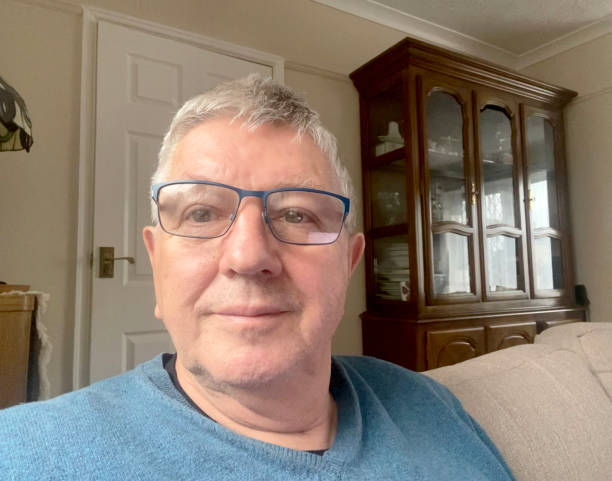
"He Was Still Here. But He Wasn't Really Here Anymore."
"Tom was a civil engineer for 38 years. He built bridges. Actual bridges. He could look at a set of plans and see the finished structure in his mind, every load, every stress point, every potential weakness. His brain was the sharpest thing about him.
The Parkinson's took his body first. The tremor. The stiffness. The shuffling walk. I could handle that. I became his steadying hand, his driver, his pill organiser. I adapted. We adapted. That part was hard, but it was manageable.
Then it came for his mind.
It started with the names. He'd been calling our grandchildren by the wrong names, swapping Sophie and Charlotte, calling James by his brother's name. I told myself this was normal. People mix up names. It doesn't mean anything.
But then the sentences started trailing off. He'd begin a thought and lose it mid-word. His mouth would hang open for a second, searching, and then he'd wave his hand and say 'oh, you know what I mean.' I did know what he meant. But the fact that he couldn't say it anymore sat in my chest like a stone.
He stopped reading. Tom had read the newspaper every morning for forty years. Cover to cover, pen in hand for the crossword. One morning I noticed the paper was still folded on the kitchen table at noon. 'I can't concentrate on it,' he said, not looking at me. 'The words just slide off.'
That was the moment I knew this wasn't just Parkinson's taking his movement. It was taking HIM.
Dinner parties became torture, for both of us. He'd sit quietly while our friends talked, smiling at the right moments but not participating. On the drive home he'd say, 'I couldn't follow it. Too many voices.' I'd squeeze his hand and say nothing. But inside, I was screaming.
I started researching at 11 PM while he slept. 'Parkinson's cognitive decline.' 'Parkinson's brain fog.' 'How to slow Parkinson's dementia.' Every search result made my stomach drop. 40% develop dementia. No approved treatment. The drugs available are borrowed from Alzheimer's and barely work.
Then I found an article about neuroinflammation and Nerve Growth Factor. How the same fire destroying his motor neurons was also destroying his cognitive neurons. How a compound called Lion's Mane could cross the blood-brain barrier and stimulate the brain to produce its own NGF, the growth factor his thinking neurons were starving for. And how it came blended into a coffee.
A coffee. Something I could hand him tomorrow morning without it feeling like another medical intervention. Without him knowing it was anything other than a good cup of coffee.
I ordered it at midnight."
Robert, 74, caregiver to Tom (diagnosed 8 years)
The Brain Fog Equation: What You've Spent Watching Them Fade
What You've Been Paying For a Mind That Keeps Declining
Cholinesterase inhibitors (rivastigmine, donepezil): $200 to $500/month with side effects, and they say it doesn't help
Neuropsychological testing: $500 to $3,000 per evaluation to hear "mild cognitive impairment, common in Parkinson's"
Cognitive rehabilitation therapy: $150 to $300/session, hard to get to with mobility issues
Brain training apps: $10 to $30/month. You bought them. They sit unused.
Hours spent researching at midnight: your sleep, your health, your peace of mind
Cost: Thousands. They're still fading.
$1.35/Day
✓ Lion's Mane: stimulates the Nerve Growth Factor their brain is starving for
✓ Chaga: fights the neuroinflammation attacking their cognitive circuits
✓ Cordyceps: combats the fatigue clouding their thinking
✓ Reishi: calms the anxiety amplifying every cognitive stumble
✓ Non-invasive, pill-free, zero side effects
✓ Works alongside their existing medications
✓ 90-day money-back guarantee (under 1% return rate)
✓ Coffee format. No pills. No negotiation. No medical feeling.
40x cheaper than a standard recovery programme
You've spent years fighting for their mobility. Isn't their mind worth $1.35 a day?

How Much Longer Will You Watch Before You Act?
Every day without neuroprotective support is another day of:
Their Nerve Growth Factor declining while cognitive neurons starve
The neuroinflammation spreading from their motor circuits to the circuits they think with
The connections fraying. The pathways they use to remember your name, follow your conversation, be present with your family
The fog thickening. More lost words, more blank stares, more moments where you see them searching for something that used to be automatic
The question getting louder. The one you type into Google at midnight: "Is this the beginning of dementia?"
You've been the researcher. The advocate. The one who finds things. You've found every medication adjustment, every therapy appointment, every supplement worth trying.
This is the next thing you find.
89% of users reported sharper brain function. 82% within just 4 weeks. Movement disorder specialists are recommending it. And Lion's Mane is the only compound clinically shown to stimulate the brain's own Nerve Growth Factor production.
You can hand it to them tomorrow morning. They'll think it's coffee. Their brain will know the difference.
The 90-Day Clarity Guarantee
We're so confident NeuroFuel will support their cognitive recovery that we're giving you 90 days to try it completely risk-free. If it doesn't meet your expectations, send it back for a full refund. No questions asked.
What caregivers report:
Week 1 to 2: Their mornings are slightly clearer. They're alert sooner. You notice they're more engaged at breakfast, responding faster, making eye contact, less of the vacant fog. You tell yourself not to get excited.
Week 2 to 3: They finish a sentence without searching. They remember something from yesterday without being prompted. You catch yourself staring at them, looking for the person you've been missing. They're starting to come back.
Week 4 to 6: The 89% window. They tell a story with detail and timing. They follow a conversation in a group. They pick up a book, a newspaper, a crossword. A friend leans over and whispers, "He seems sharper." You know. You've known for two weeks.
Month 2 to 3: Cumulative effect. The clarity stabilises. They're more present, more engaged, more like themselves. Not the version from ten years ago. But a version you recognise. A version you can have a real conversation with. A version that makes you feel less alone.
Our return rate is under 1%. That's how confident we are. And that's how confident caregivers become once they see the change.
The guarantee removes your financial risk. But it can't give back the conversations you'll lose while you wait.
Robert and Tom's First Month: Morning by Morning
Day 1
I made Tom's first cup instead of his usual instant. He took a sip and raised his eyebrows. "This is good. Where'd you get this?" I told him I'd found a new brand. He didn't need to know the rest. That morning was the same as every other. Foggy, slow, the distant look I've learned not to comment on.
Day 7
Tom was telling me about something he'd seen on television. Normally these recaps are fragments. A name, a plot point, trailing off. This time he described an entire scene. Characters. What happened. Why it mattered. I was washing dishes and I stopped, because I realised I was actually listening. Not filling in gaps. Listening.
Day 14
At breakfast, I mentioned that Sophie's school play was on Thursday. Tom said, "Thursday. That's the day after your dentist appointment." He hadn't remembered a schedule detail unprompted in months. I dropped the toast. He looked at me confused. "What?" Nothing. Everything.
Day 21
We had dinner at Carol and David's. I was bracing myself for the usual: Tom quiet, me translating, both of us exhausted on the drive home. Instead, he told the bridge story. The one from 1977, the one that used to make everyone roar. He told it with the setup, the detail about the engineer who wore the wrong boots, the punchline. Carol caught my eye and mouthed: "He's back." I nodded. I couldn't have spoken if I'd tried.
Day 30
This morning I brought Tom his coffee and sat across from him while he read the newspaper. Pen in hand. Working the crossword. Looking up occasionally to tell me something he'd read. I sat there watching him and I thought: I have my husband back. Not all of him. Not the man who could calculate load-bearing stress in his head. But the man who reads the paper with a pen. The man who remembers which day the school play is. The man who tells stories at dinner. That man was disappearing. And now he's here again, sitting across from me, circling a crossword clue and muttering "six letters, starts with P..." I don't know how long this lasts. But I'm not going to waste a single morning of it.
GET NEUROFUEL NOW. BEFORE THE PERSON YOU MARRIED BECOMES SOMEONE YOU HAVE TO INTRODUCE YOURSELF TO.

Customer Reviews
 4.8 out of 5
3,791 customer ratings
 90 Day Money Back Guarantee
 Free & Fast Worldwide Shipping
 Safe & Secure Checkout
 No-Hassle Returns
P.S. You're reading this because you've noticed. The lost words. The blank looks. The quiet at dinner. You noticed before they did, and you've been carrying that knowledge alone. There is no approved drug for Parkinson's brain fog. The cholinesterase inhibitors target the wrong mechanism. The crossword puzzles aren't enough. But Lion's Mane is clinically shown to stimulate the Nerve Growth Factor their cognitive neurons are starving for. You can hand it to them tomorrow morning. They'll think it's a good cup of coffee. 89% of users reported sharper brain function. You've been the one finding solutions since the diagnosis. This is the next one you find.
P.P.S. Robert's friend Carol whispered "He's back" at dinner. Robert made Tom's coffee that morning. He makes it every morning. The only question is: will you make yours?
NOTICE: As of April 2026, demand for NeuroFuel has surged dramatically following new neuroprotection research and inventory is limited.
Lock in your order while you can to Get An Extra 33% OFF + FREE SHIPPING
Limited Time Offer Ends Sunday

Hurry! Discount ends soon.
90 Day Money Back GuaranteeFree & Fast Worldwide ShippingSafe & Secure CheckoutNo-Hassle ReturnsRecommended
GET 33% OFF NOW
Customer Reviews
★★★★★
By Feature
Comments
Dorothy Chambers
Has anyone bought this for their spouse with Parkinson's? My husband's brain fog is getting worse and his neurologist says there's nothing specifically for cognitive symptoms. He barely talks at family dinners anymore.
Carol Jennings
I started making it for my husband about 5 weeks ago. He thinks it's just nice coffee. The biggest change has been his THINKING. He's sharper in the mornings. More present in conversations. Yesterday he remembered our granddaughter's recital date without me reminding him. I nearly fell off my chair. Small thing. Huge deal.
Eleanor Bishop
The brain fog was destroying my husband before the tremor did. He was a civil engineer. Built bridges. Now he couldn't plan dinner. I ordered this after reading about the Nerve Growth Factor mechanism. After a month his thinking is noticeably clearer. He planned and cooked a meal last week, start to finish, for the first time in over a year. I cried in the kitchen while he wasn't looking.
Jim Patterson
How fast does it ship? My wife has PD and her cognitive symptoms are getting worse. Her neurologist put her on donepezil but she says it does nothing except make her nauseous. I need to get her started on something else.
Sandra Mitchell
@Jim mine arrived in 4 days. My mum started the same morning. I didn't tell her what was in it, just said I'd found a really nice coffee. By week 3 she was finishing her own sentences again. Give it time.
Robert Gaines
My wife ordered this because she said she "wanted me back." Her words. I didn't realise how much I'd changed until the fog started lifting. 6 weeks in and I can do the crossword again. I can follow the news. I remembered my old colleague's name at a reunion. My wife cried. I think the caregivers feel this more than we do.
Margaret Owens
I'm a caregiver for my husband with PD. The cognitive decline was scaring me more than the falls. Not because it was more dangerous, but because I was losing HIM. Not his body. Him. After 6 weeks on this coffee, he told me a joke at breakfast. A proper joke with a setup and a punchline. I can't remember the last time he did that. Whatever this is doing, it's working.
Nancy Kirkland
Is this safe alongside rivastigmine and Sinemet? My husband takes both and I don't want any interactions.
Paula Remington
@Nancy yes, it's natural mushroom extracts in coffee. No drug interactions. My dad takes it alongside his full PD regimen and his neurologist was fine with it. The 90-day guarantee means there's no risk.