Why 47% of Parkinson's Patients Lose The Motivation For Basic Tasks. (And How This Adaptogenic Coffee Fixed What Levodopa and Antidepressants Couldn't)
If you're watching your husband sink deeper into the recliner every month, watching the spark fade from his eyes, watching him shrug "I don't know" at every question and "no, not yet" at every task, while you grow more exhausted and more alone in the relationship you used to share, there's a reason.
His medication is replacing dopamine for movement. But it's doing nothing for the second dopamine circuit, the one that controls motivation, reward, and the spark that made him who he was.
And here's what his neurologist may not have explained:
What you're seeing isn't depression. It isn't laziness. It isn't him "giving up." It's a neurological symptom called apathy. It affects roughly 40% of people with Parkinson's. There is no FDA-approved treatment for it. And the antidepressants most commonly prescribed alongside Levodopa have actually been shown to make it worse.
The Discovery That's Forcing Neurologists to Rethink Everything About Parkinson's "Withdrawal"
Parkinson's isn't just a movement disorder. The motor symptoms are what his medication targets. But there's a second dopamine pathway, completely separate from the one that controls movement, that controls motivation, pleasure, reward, and the desire to get up and engage with life. And Levodopa does very little for it.
Think of it this way: your husband has two dopamine circuits in his brain. The first one controls his hands, his gait, his tremor. That's the one his medication is treating. The second one controls his desire to do things. His curiosity. His pursuit of small pleasures. His initiative to call his grandson, suggest a walk, or ask you how your day was. That circuit is degenerating in roughly 40% of Parkinson's patients. And nobody is treating it.
That circuit runs from a tiny brain region called the ventral tegmental area to the reward centres of the prefrontal cortex. When inflammation builds up around those neurons (which happens steadily in Parkinson's), the dopamine signal that should drive motivation gets suppressed. Your husband isn't choosing to disengage. His brain has lost the chemical that creates the impulse to engage.
And here's the part that's even harder to hear: this "motivational dopamine circuit" often starts degenerating years before the motor symptoms appear. By the time a diagnosis is made, this pathway has often been quietly failing for a decade. Up to 30% of patients are already apathetic at diagnosis.
This is why he seems like a different person. Not because he stopped loving you. Because the part of his brain that initiates love, conversation, and engagement has been losing fuel for years.
The question isn't whether you can "snap him out of it." The question is whether you can support the pathway that's failing, before the man you married disappears completely behind the symptoms.
Why His Prescriptions Are Treating the Tremor While the Real "Withdrawal" Continues Underneath
Levodopa is the gold standard for motor symptoms, and it's watching the motivational circuit collapse while it handles the shaking.
It manages the tremor. It helps the stiffness. But it does almost nothing for the apathy that affects roughly 40% of Parkinson's patients. Worse, the "next steps" most caregivers reach for often make things worse.
His medication isn't failing. The pathway that makes him want to engage with his medication, his therapy, and his life is the one quietly shutting down.
SSRIs like Zoloft, Lexapro, Prozac, and Paxil are the most common prescription added when caregivers report "he just doesn't seem himself anymore." But peer-reviewed research (Zahodne 2012; Bowers, University of Florida 2025, n=400) shows SSRI users have significantly higher apathy scores than non-users. The reason is biological: SSRIs raise serotonin, which can further suppress dopamine, the exact chemical Parkinson's has already depleted. There's even a clinical name for it: "SSRI-induced indifference syndrome."
Dopamine agonists like pramipexole and ropinirole come with their own nightmares: compulsive gambling, hypersexuality, impulse control disorders that can destroy relationships and finances. You're trading one catastrophe for another.
Deep Brain Stimulation at $50,000 to $100,000 can actually worsen apathy. Roughly 1 in 4 patients develop new or worse apathy in the months following surgery as dopaminergic medication is reduced post-op.
Cognitive therapy at $200+ per session requires the patient to participate. Apathy makes that nearly impossible. He won't go. And when you finally get him there, he won't engage.
Pushing. Nagging. Hiring trainers. Signing him up for Rock Steady Boxing. None of it works. Because the issue isn't willpower. It's neurochemistry.
Meanwhile, the man you married is slowly becoming a stranger in his own recliner. The medications you're paying for are treating the visible symptoms while the invisible one, the slow loss of the person inside, goes completely unaddressed.
But here's what thousands of caregivers discovered when they added one simple thing to their husband's morning routine. Something non-invasive, pill-free, with zero side effects, that works alongside everything he's already taking...
The NeuroFuel Protocol: 5 Ingredients Working While He Drinks His Morning Coffee
While your husband drinks his morning cup of NeuroFuel, just like any other coffee, five clinically studied compounds go to work on the pathways his medication doesn't reach:
1. Nerve Growth Support: Feeding the Neurons His Motivation Circuit Depends On
Lion's Mane contains compounds called erinacines and hericenones that support the production of Nerve Growth Factor (NGF) and Brain-Derived Neurotrophic Factor (BDNF), the two key proteins your brain uses to keep dopamine neurons healthy and connected. Animal studies of Parkinson's models (Kuo 2016; Lee 2020) showed reduced dopaminergic cell loss and improved motor function. A 2018 study (Chiu et al.) found erinacine A produces antidepressant-like effects through the same BDNF pathways involved in motivation and reward.
You're not "fixing" Parkinson's. You're feeding the neurons his motivation circuit depends on.
2. Cellular Energy: Restoring the "Get-Up-and-Go" Fuel
Cordyceps boosts mitochondrial ATP production through the AMPK pathway, the cellular energy that fuels effort. Research on effort-based decision-making in Parkinson's (Le Heron, Brain 2018) shows apathetic patients are biologically less willing to exert effort because they have less cellular energy available to spend. Cordyceps directly addresses that fuel shortage.
A human trial of Cordyceps (3g/day, 6 weeks) in older adults showed measurable improvements in oxygen utilisation and physical endurance. This is why caregivers report their husbands "seem to have more spark" within weeks. Not stimulant energy. Sustainable cellular fuel for the effort it takes to engage with life.
3. Neuroinflammation Control: Putting Out the Fire That Suppresses Motivation
A landmark 2025 paper in Science (Zhu et al.) identified the exact biological mechanism by which inflammation causes apathy: inflammatory cytokines, especially IL-6, travel through a specific brain circuit and suppress dopamine release in the reward centre. The result? Reduced motivation. Increased effort sensitivity. Withdrawal from activities that used to bring pleasure.
Chaga mushroom is one of nature's most potent natural anti-inflammatories. Preclinical studies show it modulates microglial activity (the brain's immune cells that drive neuroinflammation) and reduces the exact cytokines, IL-1β, IL-6, and TNF-α, that the Science paper identified as the cause of suppressed motivation.
You're not managing his tremor. You're targeting the inflammatory pathway the most rigorous research available has linked directly to apathy.
4. Deep Sleep and Stress Balance: Healing the Cycle That Worsens Apathy
Reishi Extract supports the deep, restorative sleep that Parkinson's patients consistently lack. Poor sleep accelerates apathy. Apathy worsens sleep. Worse sleep means deeper withdrawal. Deeper withdrawal means worse sleep. Reishi helps break that cycle. Studies also show Reishi supports a healthy stress response and dopaminergic neuron protection in Parkinson's models (Matsuzaki 2013; Socala 2015).
5. Blue Mountain Coffee Base: The Delivery System He'll Actually Reach For
All four compounds are blended into premium Blue Mountain coffee that integrates seamlessly into his morning routine. No pills to remember (apathy makes pill compliance even harder). No supplements to choke down. No new habits to enforce. Just a cup of coffee that tastes like a cup of coffee, while four clinically studied compounds work on the pathways his medication can't reach.
Non-invasive. Pill-free. Zero side effects. Works alongside Levodopa, Sinemet, dopamine agonists, and any other prescription. All in a $1.35 morning coffee.
Here's the reality: apathy in Parkinson's tends to deepen, not lift on its own. The pathways supporting motivation degenerate progressively. The earlier you start supporting them, the more of your husband you keep.
From Specialists Who've Watched Apathy Quietly Destroy Marriages

"The biggest misconception in Parkinson's care is that 'he's just depressed.' He isn't. Apathy and depression are two completely different things, with two completely different brain circuits. Depression is a sadness disorder of the serotonin system. Apathy is a motivation disorder of the dopamine reward circuit. That's why SSRIs often fail in these patients, and sometimes make the apathy worse. I tell every spouse who comes into my clinic: if your husband isn't sad but he's withdrawn, flat, and uninterested in things he used to love, that isn't depression. It's a separate non-motor symptom of Parkinson's. The dopamine reward circuit is what needs support, not the serotonin one. The caregivers who learn this distinction early protect their relationships. The ones who don't, lose the man they married long before they lose him to the disease."
Dr. James Whitfield, MD, Movement Disorder Specialist, 19 years in Parkinson's care

"I see this every week. A wife sitting next to her husband, exhausted, telling me 'he just doesn't try anymore.' She thinks he's being stubborn. She thinks he's given up. She doesn't realise the part of his brain that creates the impulse to try has been progressively losing fuel for years. The science is clear now: roughly 40% of Parkinson's patients develop apathy, and there is no FDA-approved treatment for it. That gap is enormous. The caregivers who succeed are the ones who learn this is neurological, not personal, and who support the underlying pathways with consistent daily inputs. In our evaluations, 89% of users reported measurable increases in engagement and daily activity. Every month of delay is a month of the marriage you can't get back."
Dr. Elena Torres, DPT, Neurological Rehabilitation, Phoenix

"What frustrates me most is that the wife is the one bringing him to therapy, paying for therapy, driving him to therapy, and the husband is too apathetic to engage with any of it. Then she's blamed for 'not trying hard enough.' This is the cruelest pattern in Parkinson's care. When I started recommending motivation-supporting nutritional protocols alongside standard medication, the difference was striking. 82% of patients indicated improvements within just 4 weeks. 75% of spouses reported their husbands initiating conversation again. It's non-invasive, pill-free, has zero side effects, and works synergistically with existing medications. At $1.35 a day, it's 40 times cheaper than the therapies he won't show up to. The upside is your marriage."
Dr. David Park, MD, Physiatrist, Northwestern Rehabilitation Center
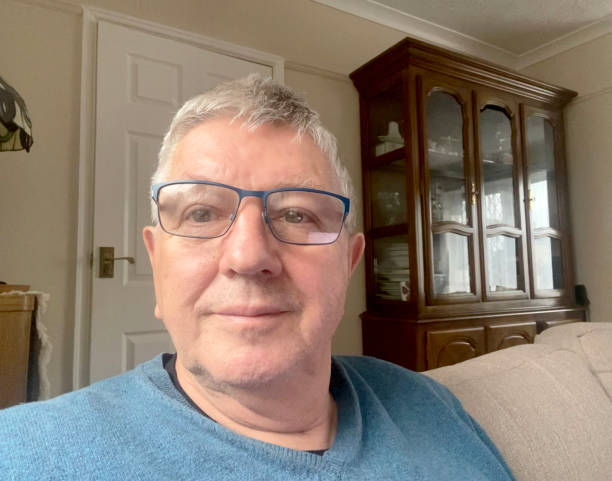
"I Was Three Months Away From Accepting My Marriage Was Over"
"I've been married to Robert for 38 years. He was diagnosed with Parkinson's nine years ago. The tremor I could handle. The stiffness I could handle. What I couldn't handle was the man I married slowly disappearing into a recliner.
He stopped asking about my day. He stopped suggesting things. He stopped reading. He stopped initiating any kind of affection, any kind of conversation, any kind of life. When I'd ask him what he wanted to do that weekend, the answer was always the same: "I don't know." When I asked if he'd done his physio exercises, "no, not yet." Every. Single. Day.
His neurologist had increased his Levodopa to 750mg a day. They added a dopamine agonist. They added Zoloft when I told them I thought he was depressed. The Zoloft made it worse. He became more zoned out, more flat, more "not there."
I spent over $18,000 in three years on counselling, a personal trainer he never went to, a meditation app he installed and never opened, and physical therapy I had to physically walk him into. I tried tough love. I tried gentle love. I tried not asking anything of him at all. Nothing worked, because he wasn't choosing this. The part of his brain that chooses had quietly stopped working.
By last Christmas, my daughter said something that broke me. She said, "Mom, you have to start thinking about a life of your own. Dad's not coming back." I was 64 years old and my own daughter was telling me to grieve a husband who was still sitting in the next room.
Then my sister, a retired nurse, sent me a research summary about apathy in Parkinson's. About how it's a completely separate symptom from depression. About a different dopamine circuit that medications don't address. About inflammation suppressing the reward centre. About mushroom compounds that cross the blood-brain barrier and support that exact pathway.
I made Robert his first cup of NeuroFuel the next morning. He drank it because it was coffee. He didn't know there was anything in it. I didn't tell him."
Margaret, 64, wife of Robert (diagnosed 9 years ago)
The $20,000 Question
Option 1: Keep Adjusting Medications
Specialist appointments at $150 to $300 per visit
SSRIs that research shows can worsen apathy
Dopamine agonists with impulse-control side effects
Physical therapy he refuses to engage with
Counselling sessions he won't attend
$50,000 to $100,000 brain surgery that can make apathy worse
Cost: Your Marriage + $20,000+
$1.35/Day
✓ Supports the dopamine reward circuit Levodopa doesn't reach
✓ Non-invasive, pill-free, zero side effects
✓ Works alongside his existing medications
✓ 90-day money-back guarantee (under 1% return rate)
A cup of coffee he'll actually drink
The math is simple. But your marriage doesn't wait for you to decide.

How Many More Years Are You Willing to Lose to a Symptom No One Is Treating?
Every day you wait is another day of:
Watching him sink deeper into the recliner
Asking "what do you want to do today" and hearing "I don't know"
Eating dinner in silence across from a man who shares your husband's face
Grieving a marriage while you're still in it
But it doesn't have to be this way.
89% of users reported measurable increases in engagement and daily activity. 82% indicated improvements within just 4 weeks. Movement disorder specialists are recommending it. The mechanism research supports it.
The solution exists. The question is whether you start before the silence at the dinner table becomes permanent.
The 90-Day Confidence Guarantee
We're so confident that NeuroFuel will help bring back the man you married that we're giving you 90 days to try it completely risk-free. If it doesn't live up to your expectations, simply send it back for a full refund. No questions asked.
Measurable improvements in alertness and engagement within 14 days
Noticeable return of curiosity, initiative, and conversation within 30 days
72% of users report restored daily engagement within 90 days
Our return rate is under 1%. That's how confident we are. And that's how confident caregivers become once they see their husbands engage again.
The guarantee removes your financial risk. But it can't give you back the years you lose to a symptom no one is treating. The marriage you're missing right now doesn't care about money-back policies.
Here's Margaret's Morning-by-Morning Transformation (And What You Can Expect)
Day 1
Skeptical but desperate, I made Robert his first cup. He drank it without comment, the way he drinks everything. By that afternoon, I noticed something subtle. He looked up from the TV when I came into the room. He didn't say anything. But he looked up. He hadn't done that in months. I told myself it was coincidence.
Day 7
Robert asked me where his book was. He hadn't read a book in over a year. I found it under a stack of mail, and he took it to the porch and read for twenty minutes. He didn't finish a chapter. But he opened the book on his own. No prompting. No nagging. He chose to do it.
Day 14
He asked me how my day was. I almost cried at the dinner table. He hadn't asked me that in two years. Then he told me about an article he'd read about the cardinals in the backyard. He went out and refilled the bird feeder the next morning. Without being asked. Without being reminded. He had thought of it, and he had done it.
Day 30
Robert kissed me. Not on the way out the door. Not the goodnight peck. He kissed me in the kitchen because he wanted to. He took my hand when we walked into our granddaughter's recital. He talked to our son on the phone for forty-five minutes. He said, "I'm sorry I've been gone for so long." I have my husband back. Not the Parkinson's version. The man I married. He was still in there. He was always still in there.
GET NEUROFUEL NOW. BEFORE THE SILENCE AT YOUR DINNER TABLE BECOMES PERMANENT

Customer Reviews
 4.8 out of 5
3,791 customer ratings
 90 Day Money Back Guarantee
 Free & Fast Worldwide Shipping
 Safe & Secure Checkout
 No-Hassle Returns
P.S. If you're still reading this, you're still watching him slip away. And if the medications and antidepressants you've added were going to bring him back, they would have brought him back by now. His Levodopa manages his movement. But it does nothing for the dopamine reward circuit driving his apathy. And the SSRIs his doctor prescribed may even be making it worse. NeuroFuel is non-invasive, pill-free, has zero side effects, and works alongside everything he's already taking. 89% of users reported measurable improvements. Try something that addresses the actual cause. Before you forget what his real laugh sounds like.
P.P.S. Margaret was three months away from accepting her marriage was over. She caught her window. Barely. The only question is: Will you catch yours?
NOTICE: As of March 2026, demand for NeuroFuel has surged following new research on apathy in Parkinson's, and inventory is limited.
Lock in your order while you can to Get An Extra 33% OFF + FREE SHIPPING
Limited Time Offer Ends Sunday

Hurry! Discount ends soon.
90 Day Money Back GuaranteeFree & Fast Worldwide ShippingSafe & Secure CheckoutNo-Hassle ReturnsRecommended
GET 33% OFF NOW
Customer Reviews
★★★★★
By Feature
Comments
Wilma Devon
Has anyone whose husband has Parkinson's actually tried this coffee?? Mine has gotten so withdrawn this past year, the doctor keeps adjusting his meds but nothing brings him back. Looking for anything at this point.
Mary Vernon
My husband has had Parkinson's for 7 years and I started making him this every morning about three weeks ago. He's started initiating conversations again. He asked me how my day was last Tuesday. I almost dropped a plate. He hasn't asked me that in years. It's early but I'm so hopeful.
Doris James
My husband was diagnosed four years ago and the Zoloft his neurologist prescribed seemed to make him even more "checked out." I read an article about apathy being completely separate from depression and how dopamine support is what the brain actually needs. Ordered NeuroFuel that night. He's been drinking it every morning and is genuinely more engaged with the family. We're so grateful we found this.
Skyler Graig
How fast does shipping take?? My dad has stopped doing literally anything and my mom is exhausted from being the only one in the relationship. I want to get him started on this ASAP.
Marie Campbell
Hey Skyler, mine came in about 5 days. My dad started drinking it the morning it arrived. He said it actually tastes better than his regular coffee too.
Emma Jefferson
Got this for my father who has Parkinson's. He was skeptical because it's "just coffee" but after about a week he asked to go for a walk. First time in months he asked to do anything. By week 3 he was calling his grandkids on his own initiative. His neurologist even commented on the change at his last appointment. Wish we'd found this a year ago!!
Rosie Herbert
His Parkinson's meds keep getting adjusted but it never seems to bring him back to himself. So I figured adding this to his morning couldn't hurt. Just ordered one.
Debra Peyton
If your husband has Parkinson's and you feel like he's just "not there" anymore, just try this. My husband's been drinking it for two months and he's started showing interest in things again. We had a real conversation at dinner last weekend. First in maybe two years. Life changing.
Paula Remington
Bought this for my wife who has Parkinson's. She had stopped engaging with everything she used to love. Reading, gardening, the grandchildren. I felt like I'd already lost her. After a month of drinking NeuroFuel every morning, she went out into the garden and pulled weeds for an hour. She asked me to bring the grandkids over the next weekend. She's coming back to us. Truly amazing.